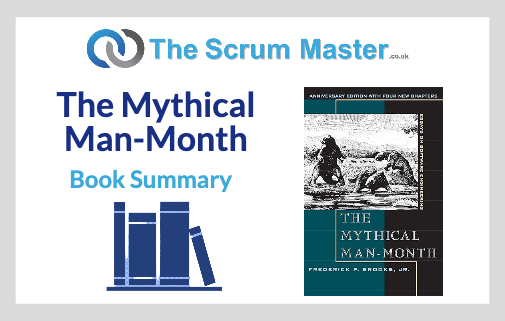
Few books in software engineering have stood the test of time like The Mythical Man-Month by Frederick P. Brooks Jr. Originally published in 1975, it remains one of the most insightful examinations of why software projects fail and how teams can work more effectively. Brooks, who managed IBM’s OS/360 project, distilled hard-earned lessons about managing complex systems, team coordination, and the limits of human productivity. His core ideas are as relevant today as they were decades ago, offering timeless truths about communication, complexity, and the human side of software development.
The book’s title comes from Brooks’s most famous observation: adding more people to a late software project makes it later. This runs counter to the common assumption that effort is linearly scalable. Many project managers believe that if one person can complete a task in one month, two people can finish it in half the time. Brooks demonstrates that this assumption rarely holds true in software engineering.
The key issue lies in communication and ramp-up time. Every new team member must be trained, integrated, and coordinated. The communication overhead increases exponentially as team size grows, meaning each person must now spend more time syncing with others rather than doing productive work. Instead of speeding things up, the extra coordination often slows things down dramatically. This insight, now known as “Brooks’s Law,” is one of the most enduring lessons in project management and serves as a warning to anyone trying to fix schedule problems by simply hiring more developers.
Brooks’s discussion of communication overhead remains particularly relevant in today’s era of distributed teams. As teams grow, the number of communication channels increases rapidly. In a team of two people, there’s only one communication path. With three people, there are three paths. With five people, there are ten. Once you get to twenty people, there are 190 potential communication channels. The result is confusion, duplication of work, and endless meetings.
To manage this complexity, Brooks advocates for small, cohesive teams where members understand their roles clearly and communicate efficiently. He compares successful software development to surgical teams. Just as a surgical team has one lead surgeon supported by a group of specialists, a software team should have one main architect or “chief programmer” supported by others who handle specific tasks like testing, documentation, and tooling. This model keeps decision-making centralised while still allowing collaboration.
Modern Agile practices such as Scrum reflect similar thinking. Scrum Teams are intentionally small, usually ten or fewer people, to minimise coordination costs. They work in short iterations to deliver value incrementally and adapt quickly. Brooks anticipated this principle long before Agile was formalised, recognising that team structure and communication are far more critical to success than sheer manpower.
Another timeless insight from Brooks is what he calls the “second-system effect.” After building one successful system, designers and developers often approach their next project with overconfidence. They attempt to include all the features they left out the first time and experiment with overly ambitious designs. The result is usually bloated, overly complex software that becomes difficult to deliver on time or maintain.
This tendency arises because engineers learn from their first project but also carry unfulfilled ideas forward. They try to “do it right this time” by adding everything they think they missed before. Brooks warns managers to be especially cautious when their teams are building a second system. The solution is to keep designs simple, resist the urge to over-engineer, and always focus on delivering the minimum necessary to solve the customer’s problem.
This principle resonates strongly with modern lean and Agile approaches that prioritise simplicity and continuous learning. Build a small, functional version first, get user feedback, and evolve it gradually rather than trying to perfect everything upfront.
A recurring theme throughout the book is “conceptual integrity.” Brooks argues that a successful system should feel as though it were designed by a single mind, even if a team built it. Conceptual integrity means the design is coherent, consistent, and focused on a clear vision. Without it, software becomes a patchwork of inconsistent ideas and interfaces that frustrate users and developers alike.
Brooks suggests that achieving conceptual integrity requires strong leadership and a clear architectural vision. In his view, it’s better to have a single designer or small group of architects responsible for maintaining the system’s conceptual consistency. This does not mean suppressing collaboration but rather providing a unifying direction that guides everyone’s efforts.
In today’s context, product owners, product managers, and Scrum Masters often play a role in maintaining conceptual integrity. The product vision and roadmap provide the guiding principles, while development teams make implementation decisions within that framework. The lesson remains that every successful product needs a clear sense of direction, consistency, and purpose.
In one of the book’s most famous metaphors, Brooks compares software development to a tar pit. From the smallest script to the most ambitious system, every developer eventually gets stuck. Complexity, dependencies, unclear requirements, and evolving technology all conspire to trap teams in the sticky mess of software engineering.
What makes the tar pit particularly challenging is that no matter how experienced or well-organised a team is, some degree of difficulty is inevitable. Building software is inherently hard because it involves translating ambiguous human needs into precise, logical instructions. Every change introduces risk. Every new feature affects existing ones in unpredictable ways.
Brooks’s advice is to embrace the challenge rather than deny it. Good software engineering is as much about managing complexity as it is about writing code. Planning, testing, communication, and iteration are not bureaucratic burdens but essential survival tools for navigating the tar pit.
Brooks places strong emphasis on documentation, but not in the sense of endless paperwork. He believes clear written communication is vital to coordination and shared understanding. A well-documented design helps align team members, onboard newcomers, and preserve decisions for future reference.
He particularly values the “specification document” that defines what the software should do before it is built. This document should describe the user’s view of the system, not the internal design. Brooks understood that unclear requirements are one of the biggest sources of project failure, and documentation helps reduce that uncertainty.
However, he also warns against excessive documentation that becomes outdated or ignored. The key is balance: just enough documentation to communicate intent, no more. Agile’s preference for “working software over comprehensive documentation” captures this same spirit.
Brooks also explores why software project estimates are notoriously unreliable. The biggest culprit, he argues, is optimism. Developers tend to assume that everything will go according to plan. They underestimate unknowns, forget integration challenges, and rarely account for testing and debugging time.
He recommends breaking work down into smaller, measurable units and learning from past projects to improve estimates. He also notes that progress in software development is often invisible. Unlike physical construction, you cannot see half a program built. This makes it harder to assess how much work remains.
In Agile environments, iterative planning and regular inspection mitigate these issues. Instead of relying on a single upfront estimate, teams adjust as they learn. Brooks’s advice to estimate conservatively and plan for the unknown aligns perfectly with Agile’s empirical mindset.
Brooks distinguishes between two modes of software work: building and fixing. The first is about creating the initial version of a system. The second is about correcting mistakes, optimising performance, and refining features. He notes that the fixing phase often takes far longer than anyone expects, as real-world use reveals hidden flaws and integration issues.
This observation reinforces the importance of continuous testing, early integration, and feedback loops. Rather than waiting until the end to fix everything, teams should integrate, test, and review throughout development. This approach reduces surprises and improves overall quality. Agile’s emphasis on continuous integration, test automation, and incremental delivery directly reflects Brooks’s insights.
Amid the technical analysis, Brooks celebrates the human joy of programming. He describes the deep satisfaction that comes from building something complex and elegant that works. Developers take pride in the intellectual challenge and creativity of their work. Yet, this same joy is often accompanied by frustration, especially when things do not go as planned.
Brooks highlights the emotional nature of software development. Engineers are not interchangeable resources; they are creative professionals. Motivation, communication, and culture matter. Great teams need psychological safety, trust, and shared purpose to thrive. These insights resonate with modern discussions about team dynamics, motivation, and sustainable pace.
Brooks advocates for building prototypes early and being willing to throw them away. His famous advice is “plan to throw one away; you will, anyway.” The first version of a system inevitably contains flaws and misconceptions. Building a prototype allows teams to learn, validate assumptions, and discover what users really need. Trying to make the first attempt perfect only delays progress.
This idea underpins modern product development approaches such as Lean Startup and Design Thinking, which use iterative experimentation and rapid feedback. By acknowledging that learning requires iteration, Brooks provides a powerful argument for starting small and improving continuously.
Brooks closes his essays by reflecting on the evolution of software engineering. He recognises that better tools, higher-level languages, and reusable components can improve productivity, but he warns that no tool can eliminate the inherent complexity of creating large systems. Each generation of tools solves some problems but introduces new ones.
His perspective remains valid today, even in the age of AI-assisted development and low-code platforms. Technology evolves, but the core challenges of collaboration, clarity, and discipline remain. Success still depends on people, communication, and thoughtful design.
The Mythical Man-Month endures because it goes beyond technology to address the human and organisational aspects of software development. It reminds us that software is built by people, not machines, and that managing complexity requires humility and clear thinking. Brooks’s insights about small teams, communication, iteration, and conceptual integrity echo strongly in Agile and Scrum practices.
For anyone involved in leading or participating in software projects, this book offers wisdom that outlasts trends and tools. Whether you are a Scrum Master, Product Owner, or developer, Brooks’s reflections encourage a deeper understanding of what it truly takes to build great software together.