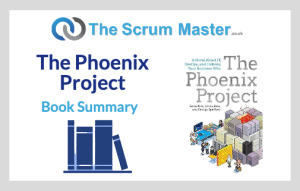
The Phoenix Project: A Novel About IT, DevOps, and Helping Your Business Win by Gene Kim, Kevin Behr and George Spafford is one of the most influential books ever written about modern IT, DevOps and organisational transformation. Told as a business novel, it follows the story of Bill Palmer, an IT manager at a large company struggling to survive under constant pressure, chaos and failure. Through Bill’s journey, the book reveals how DevOps principles and lean thinking can transform not only IT performance but the entire business.
Although it is a story about technology, The Phoenix Project is really a story about people, systems and flow. It illustrates how work moves through an organisation, how bottlenecks form, and how small improvements can produce massive results. The lessons it teaches apply just as much to product development and agile teams as they do to IT operations.
The Struggling Company
The story begins at Parts Unlimited, a large retail company whose business is in crisis. Sales are falling, competition is rising and a major digital transformation initiative called “The Phoenix Project” is supposed to save the company. The project aims to create a new online platform that will drive revenue and modernise operations. However, it is behind schedule, over budget and riddled with issues.
Bill Palmer, a mid-level IT manager, is unexpectedly promoted to Vice President of IT Operations after the previous VP is fired. He inherits a mess. The IT department is constantly firefighting — servers crash, deployments fail, and outages happen weekly. Projects are delayed, costs are rising and morale is low.
At first, Bill is overwhelmed. He spends his days reacting to emergencies, attending endless meetings and trying to manage competing priorities. Everyone blames IT for the company’s problems, yet nobody seems to understand the complexity of the systems or the workload the teams face. The situation feels hopeless.
Enter the Mentor
Bill’s turning point comes when he meets Erik, a mysterious board advisor who begins mentoring him. Erik challenges Bill to see IT not as a collection of projects and systems, but as a factory that produces value for the organisation. Just like a manufacturing plant, it has inputs, outputs, workflows, constraints and quality checks. The goal is not simply to fix problems faster, but to improve the entire flow of work from idea to delivery.
Erik introduces Bill to the concept of the Three Ways — a set of principles that underpin high-performing organisations. These become the foundation of Bill’s transformation.
The First Way: Systems Thinking
The First Way focuses on understanding the system as a whole and improving the flow of work through it. Instead of optimising individual teams or departments, leaders must look at how work moves from development to operations to customers. Bottlenecks anywhere in the flow affect the entire system.
At Parts Unlimited, Bill realises that work is constantly being delayed because there are too many handoffs, too many approvals and no visibility into what is happening. Developers throw code over the wall to operations, operations fight fires in production, and no one sees the full picture.
By applying systems thinking, Bill starts to identify constraints that slow everything down. The most critical of these is Brent, a highly skilled engineer who knows everything about the systems. Every issue, project and deployment depends on him. Brent becomes the bottleneck — nothing can move without his involvement.
To fix this, Bill and his team begin mapping the workflow and limiting the number of tasks in progress. They introduce visual boards to track work and prioritise tasks. They also protect Brent’s time, ensuring he focuses on the most important work and that his knowledge is shared across the team.
The result is greater visibility, fewer surprises and improved flow. The team starts to deliver work faster and with fewer errors. The lesson is clear: improving the system, not just individual performance, is the key to success.
The Second Way: Feedback Loops
The Second Way is about creating fast, continuous feedback loops that detect problems early and enable learning. In traditional organisations, feedback is slow and painful — defects are discovered months after they are introduced, and the cost of fixing them skyrockets.
At Parts Unlimited, the IT team often finds issues only after deployments fail or systems crash. Erik helps Bill see that the goal is to shorten and strengthen feedback loops across all levels.
The team begins introducing automated testing, monitoring and continuous integration. These practices ensure that problems are detected immediately rather than after release. They also create a culture where feedback flows both ways — developers learn from operations, operations learns from business, and everyone collaborates to improve outcomes.
Bill also improves communication with business stakeholders. Instead of being reactive and defensive, the IT team starts sharing insights, metrics and updates proactively. Over time, IT becomes a trusted partner rather than a scapegoat.
The broader lesson is that feedback drives improvement. Whether in software, product development or organisational change, the faster a team learns what works and what doesn’t, the faster it can adapt.
The Third Way: Continuous Experimentation and Learning
The Third Way focuses on creating a culture of continuous experimentation, learning and improvement. High-performing organisations treat failure as a source of learning rather than blame. They encourage innovation, experimentation and curiosity.
Initially, Parts Unlimited is paralysed by fear of failure. Every mistake leads to finger-pointing and punishment. As Bill implements new ways of working, this starts to change. The team begins conducting small, safe experiments — such as automating routine tasks or deploying changes in smaller batches.
They learn that small, frequent releases reduce risk and increase reliability. Problems are smaller, easier to fix and less likely to cause major outages. Over time, this approach transforms the company’s ability to deliver change safely and quickly.
This mindset shift is central to agile and DevOps culture. Teams that experiment, learn and improve continuously become resilient. They adapt to change rather than fear it.
From Chaos to Flow
Throughout the story, Bill applies these principles to tackle the chaos that once consumed his team. He introduces work-in-progress limits, visual management tools and prioritisation frameworks. Instead of trying to do everything at once, the team focuses on the most important work first.
They start measuring performance with meaningful metrics — lead time, deployment frequency and incident recovery time — rather than vanity metrics like hours worked or tickets closed. These metrics give real insight into system health and progress.
As these changes take hold, the company begins to see tangible results. Deployments become more reliable, outages decrease and productivity rises. The IT department moves from being a bottleneck to becoming a strategic enabler of business success.
The Importance of Flow
One of the book’s strongest messages is the importance of flow — the smooth movement of work through the system from start to finish. Interruptions, bottlenecks and rework destroy flow, increasing waste and slowing delivery.
Bill learns to view IT work in terms of flow units — the individual pieces of work moving through the system. By visualising these and removing constraints, he creates a predictable, efficient process. This concept aligns closely with lean manufacturing principles, where continuous flow and waste reduction are the cornerstones of performance.
In agile environments, flow is equally critical. Whether managing sprints or value streams, the goal is to keep work moving smoothly and sustainably. Bottlenecks, overcommitment and unplanned work are signs of systemic dysfunction. The remedy lies not in working harder but in improving the system itself.
The Human Element
Although The Phoenix Project is about systems and processes, its heart lies in people. Bill’s success depends not just on tools and methods but on relationships, trust and communication.
Early in the story, the IT and business teams operate in silos, often at odds with one another. Business leaders see IT as slow and unresponsive; IT sees business as demanding and unrealistic. Erik teaches Bill that bridging this divide is essential. Success depends on shared understanding and alignment.
Bill begins holding joint meetings where business and IT teams discuss goals, priorities and constraints openly. Over time, mutual respect grows. The business learns that IT’s challenges are systemic, not personal, and IT learns to communicate in business terms rather than technical jargon.
This cultural shift mirrors what many organisations face during agile or DevOps transformation. Collaboration, transparency and empathy are as important as automation and process improvement.
Managing Unplanned Work
A recurring theme in the book is the danger of unplanned work — the unexpected incidents, requests and emergencies that derail productivity. Bill discovers that unplanned work consumes enormous time and energy, leaving little room for improvement initiatives.
To address this, he and his team implement processes to categorise, prioritise and limit unplanned work. They use incident management practices to handle crises efficiently and introduce proactive monitoring to prevent problems before they occur.
As unplanned work decreases, the team gains capacity for strategic initiatives like automation and process improvement. This creates a virtuous cycle where stability enables innovation, and innovation further increases stability.
DevOps and the Future of Work
While The Phoenix Project predates the widespread adoption of the term “DevOps,” it effectively captures its essence. DevOps is about breaking down barriers between development and operations, fostering collaboration and delivering value continuously.
Bill’s transformation at Parts Unlimited embodies this philosophy. Development and operations stop blaming each other and start working as one team. Automation replaces manual work, and deployment pipelines become faster and more reliable.
The company also begins applying lean principles beyond IT, using the same mindset to improve other areas of the business. The lessons of flow, feedback and continuous learning prove universal.
Key Takeaways for Modern Teams
The book offers many lessons that resonate with agile and DevOps practitioners today. One of the most important is that improvement starts with visibility. You cannot fix what you cannot see. Mapping workflows, visualising work and identifying constraints are the first steps toward meaningful change.
Another key lesson is the importance of limiting work in progress. Trying to do everything at once creates chaos, delays and poor quality. Focusing on fewer priorities enables better results and faster delivery.
The story also reinforces the value of collaboration and communication. Technical excellence alone is not enough. Teams must build trust, align goals and share knowledge freely.
Finally, The Phoenix Project reminds us that change is a journey, not a destination. Continuous improvement never ends. Success comes from cultivating a culture where learning, experimentation and adaptation are part of everyday work.
A Modern Parable for Change
What makes The Phoenix Project so effective is its storytelling format. Rather than presenting dry theory, it immerses readers in a relatable narrative. Anyone who has worked in IT or product development will recognise the frustration of constant firefighting, last-minute crises and unclear priorities. The story turns these struggles into a roadmap for improvement.
Bill’s journey mirrors the path many organisations take as they move from chaos to flow, from silos to collaboration and from blame to accountability. It is a story of leadership, learning and transformation.
Ultimately, The Phoenix Project shows that technology is not the problem — how we manage and lead technology is. When teams embrace systems thinking, continuous feedback and a culture of improvement, they unlock speed, quality and value across the organisation.