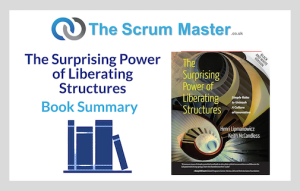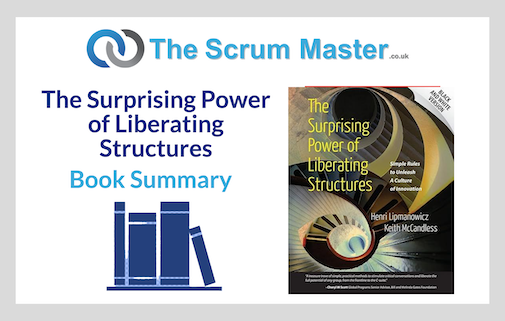
In most organisations, meetings, collaboration sessions and planning events are dominated by a few voices, leaving others disengaged or unheard. The result is predictable: limited creativity, low ownership, and solutions that fail to capture the collective intelligence of the group. The book The Surprising Power of Liberating Structures by Henri Lipmanowicz and Keith McCandless offers a refreshing and practical alternative. It introduces 33 simple but powerful interaction methods designed to unleash participation, creativity and accountability at every level of an organisation.
Liberating Structures, or LS, are easy-to-learn formats that replace rigid, top-down communication patterns with inclusive and engaging ways of working. They give every participant a voice and encourage teams to discover better answers together. The authors argue that these methods can transform the way people meet, plan, decide and innovate. The core idea is that when you design how people interact differently, you change what is possible.
Moving Beyond Traditional Structures
The authors highlight that most organisational interactions fall into familiar patterns: presentations where one person speaks and others passively listen, open discussions dominated by a few, managed discussions where only certain people contribute, or brainstorming sessions that sound creative but often reinforce existing hierarchies. These are referred to as “conventional microstructures”. They control how people interact, and most of them unintentionally limit engagement.
Liberating Structures break this pattern. Each structure is a simple framework for interaction that replaces the command-and-control dynamic with distributed participation. They are designed to include everyone, regardless of rank or role, and to invite all voices into shaping outcomes. This is why they are called “liberating” — they free people from the constraints of hierarchy and habit.
The key insight is that structure is not the enemy of freedom. Poorly designed structure limits people, but well-designed structure can create just enough order to unleash creativity. By deliberately choosing how people engage, leaders can replace frustration and inertia with energy and insight.
Principles That Underpin Liberating Structures
Lipmanowicz and McCandless identify a set of design principles that make these structures effective. First, everyone affected by an issue should have the opportunity to contribute to solving it. Second, participants must be given simple rules that guide interaction without constraining creativity. Third, the process should make it easy for people to contribute equally, regardless of power or position.
Liberating Structures also rely on short cycles of interaction, which allow people to share, build on each other’s ideas and quickly see patterns emerge. This rapid exchange of perspectives enables faster learning and decision-making. The emphasis is on small groups working in parallel, rather than one large group working sequentially.
How Liberating Structures Work
Each Liberating Structure follows a similar pattern. There is a clear invitation that frames the purpose or question. The group then follows a sequence of steps with defined time limits and participation rules. The steps usually move from individual reflection to small group discussion and then to sharing insights with the whole group. This rhythm ensures that everyone contributes and that the collective intelligence of the group emerges naturally.
For example, in “1-2-4-All”, participants first reflect individually on a question, then discuss their ideas with one partner, then with a group of four, and finally share insights with everyone. In ten to fifteen minutes, a group of fifty people can generate and converge on more ideas than in a traditional brainstorming session. The simplicity of the structure hides the depth of its impact.
The magic of these methods lies in their balance of freedom and discipline. People are free to express their ideas, yet the process keeps discussions focused and productive. This prevents domination by a few voices, ensures that shy participants contribute, and leads to better understanding across the group.
Replacing Control with Participation
The authors argue that many organisations rely too heavily on control mechanisms — rigid agendas, top-down communication, and fixed decision-making hierarchies — that stifle creativity. Leaders often fear that without control, chaos will ensue. Liberating Structures challenge that assumption by showing that distributed participation can lead to better order and stronger alignment.
By involving everyone in shaping ideas and decisions, organisations can make use of the collective wisdom that is usually left untapped. People are more likely to support and implement solutions that they helped create. This leads to higher engagement, faster learning, and stronger results.
The authors show how even complex problems can be approached through structured participation. Instead of trying to impose a single plan from the top, leaders can guide groups to explore, experiment and adapt. This reflects a key principle of Agile and Scrum thinking — progress emerges from iterative learning, not rigid planning.
The Liberating Structures Menu
The book describes 33 different structures, each designed for a specific type of challenge. They range from those that help generate ideas, such as “Brainstorming 2.0” (1-2-4-All), to those that help make decisions, build relationships, or reflect on performance.
For example, “TRIZ” invites participants to identify all the ways they could achieve the worst possible result, and then use those insights to recognise and eliminate counterproductive behaviours. “Appreciative Interviews” focus on learning from past successes rather than analysing failures. “Open Space Technology” allows participants to create their own agenda around shared themes. “Nine Whys” helps teams uncover the deeper purpose behind their work by repeatedly asking “why” until they reach the core motivation.
Each method is described with clarity, outlining the purpose, steps, timing, group size and potential variations. The accessibility of the methods is part of their power — they can be used immediately without expert facilitation or expensive tools.
Embedding Liberating Structures in Daily Work
One of the most practical sections of the book explains how to integrate these structures into everyday meetings and processes. Rather than adding more work, they replace existing, less effective formats. A weekly team meeting, a project retrospective, or a strategy workshop can all benefit from being restructured with one or more LS methods.
The authors suggest starting small. Choose one or two structures, apply them in a familiar context, and learn by doing. As people experience the energy and insight that comes from more inclusive participation, they naturally want to apply the methods more widely.
In time, teams begin to design their own combinations of structures, creating “stringed” sequences that guide complex conversations or events. For example, a team might start with “Impromptu Networking” to build connections, move to “TRIZ” to uncover unhelpful habits, and finish with “What, So What, Now What” to agree next steps. These combinations create powerful flows of discovery and action.
The Role of Leaders in Liberating Structures
Leaders play a vital role in adopting Liberating Structures, but not as controllers. Their job is to invite participation, not dictate outcomes. The leader’s responsibility is to create conditions where people can speak, listen, and learn from each other.
The book highlights that leadership in this context means trust. Leaders must trust that the group has the capacity to generate solutions, and they must be willing to let go of the need to have all the answers. This is often a challenging shift, but one that leads to better results and stronger relationships.
Leaders who use Liberating Structures learn to guide through questions rather than commands. They frame the challenge clearly, then allow the group to explore it. They focus on enabling interactions that reveal patterns and insights, rather than trying to impose structure from above.
Building a Culture of Inclusion and Experimentation
At the heart of Liberating Structures is a belief in the value of every person’s contribution. The methods are designed to give voice to all participants, not just the loudest or most senior. This inclusivity builds psychological safety — the sense that it is safe to speak up, share ideas, and take risks.
As teams and organisations adopt LS more widely, they begin to experience a cultural shift. People become more curious, less defensive, and more willing to experiment. Failures are reframed as learning opportunities. Success is measured by how well the group learns together, not just by short-term outputs.
This approach aligns closely with Agile and Lean principles. It values empiricism, collaboration, and continuous improvement. It also mirrors the spirit of Scrum events such as Sprint Retrospectives and Reviews, which are designed to create feedback loops through structured interaction.
Real-World Impact
The book shares examples from organisations that have used Liberating Structures to address real challenges — from improving healthcare outcomes to redesigning strategy processes, and from resolving conflict to accelerating innovation. In every case, the shift comes from engaging everyone, not just a few.
For instance, one hospital team used LS to redesign patient handovers, reducing errors and improving safety. A public-sector organisation used them to create alignment across hundreds of employees without relying on traditional top-down change management. Software teams have used them to improve retrospectives and planning sessions, discovering better ways to work together.
The authors emphasise that the power of LS is not in the tools themselves, but in the mindset they create. Once people experience what it feels like to be fully included in shaping solutions, they rarely want to go back to traditional approaches.
Making Change Stick
Sustaining this way of working requires patience and persistence. It is easy to slip back into old habits, especially under pressure. The authors recommend forming small groups of enthusiasts — “co-conspirators” — who support each other in experimenting and spreading the practices.
They also suggest viewing Liberating Structures as a continuous learning journey. There is no final mastery, only deeper understanding and broader application. Over time, teams learn to design their own structures, adapting the principles to fit new contexts.
Why Liberating Structures Matter
At its core, The Surprising Power of Liberating Structures is about rediscovering the collective intelligence that already exists in every organisation. It challenges the assumption that only experts or leaders hold the answers, showing that the wisdom of the crowd can be accessed through the right kind of structure.
The book is both practical and hopeful. It offers immediate tools anyone can use to make meetings, workshops and collaborations more meaningful. It also offers a long-term vision for organisations built on participation, trust and shared learning. In an era of complexity and rapid change, these are not just desirable qualities — they are essential for success.