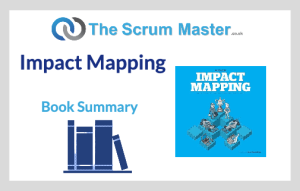
In software development, teams often face a familiar challenge: building something that meets requirements but fails to make a meaningful difference. Gojko Adzic’s *Impact Mapping: Making a Big Impact with Software Products and Projects* tackles this issue head-on. The book presents a simple but powerful technique for connecting what teams build with why they are building it. By using visual, collaborative mapping, teams can align around goals, identify assumptions, and deliver work that truly moves the needle for their organisations.
Adzic introduces impact mapping as a strategic planning tool that bridges the gap between business goals and software delivery. It provides a structured way to explore the landscape of possible solutions, ensuring that teams focus on creating outcomes rather than just outputs. The method brings together product owners, business stakeholders, developers, and designers to create a shared understanding of how their work contributes to organisational success.
From Outputs to Outcomes
Many teams measure success by the number of features delivered, rather than the value those features create. Adzic argues that this is one of the most damaging habits in modern software development. Traditional planning often begins with scope and requirements, focusing on what needs to be built rather than the change that needs to occur. Impact mapping flips this approach by starting with the business goal.
The book introduces a simple hierarchy: **Goal → Actor → Impact → Deliverable**. Each layer adds clarity to the previous one. The goal defines the desired business outcome. The actors are the people or groups who can help or hinder that goal. The impacts describe the behavioural changes needed from those actors to reach the goal. Finally, deliverables are the software features or actions that can create those behavioural changes.
By structuring discussions in this way, teams can ensure that every deliverable has a clear line of sight back to the business objective. This approach prevents wasteful development and helps teams stay focused on achieving measurable outcomes.
Building an Impact Map
An impact map is a visual diagram that captures the relationships between goals, actors, impacts, and deliverables. It typically begins with the business goal at the centre. From there, branches radiate outwards representing actors, followed by the impacts each actor can create, and finally the deliverables that could enable those impacts.
Adzic encourages teams to create impact maps collaboratively using sticky notes, whiteboards, or digital tools. The process is as valuable as the artefact itself. The map becomes a conversation piece, helping stakeholders clarify assumptions and challenge each other’s thinking.
A typical session starts by defining a clear goal. For example, a goal might be to “increase online sales by 15% in the next quarter.” The team then identifies key actors such as customers, sales staff, or marketing teams. For each actor, they explore how behaviour might change to achieve the goal. Customers might need to “complete checkout more often,” while sales staff might need to “offer better follow-up support.” Only once these impacts are clear do the team brainstorm potential deliverables, such as simplifying the checkout flow or adding a live chat feature.
The visual structure of an impact map helps teams see connections and dependencies at a glance. It also highlights alternative paths to achieving a goal, allowing for more strategic prioritisation. Rather than defaulting to feature lists, teams can choose which impacts are most likely to drive success and which deliverables offer the best return on effort.
Why Goals Matter
Impact mapping starts and ends with goals. Adzic emphasises that without a shared, measurable goal, teams are prone to drift. Goals act as anchors that guide decisions, but only if they are specific and outcome-focused.
A good goal answers the question “Why are we doing this?” and describes success in measurable terms. Vague goals such as “improve the user experience” or “modernise our system” lead to confusion. Instead, impact mapping encourages goals like “increase customer retention by 10% over the next six months.”
The book also advises setting goals that are aligned with broader business strategy. When teams can see how their work contributes to organisational objectives, motivation increases, and decisions become more coherent. This alignment prevents local optimisation where teams succeed in their own narrow terms but fail to deliver real business value.
Understanding Actors and Impacts
Identifying actors is about understanding who influences the goal. These might be customers, users, internal teams, or even external stakeholders. Adzic highlights that not all actors are allies. Some may resist change or unintentionally create obstacles. Including these in the map ensures that plans account for both positive and negative forces.
Once the actors are known, the next step is to define desired impacts. These are the behavioural changes required from the actors to achieve the goal. For example, if the goal is to reduce support costs, one impact could be “customers resolve issues themselves through self-service tools.” This shifts focus away from features and toward behaviours that drive business outcomes.
Thinking in terms of impacts also helps uncover assumptions. Teams often assume that a new feature will automatically change user behaviour, but impact mapping reveals where these assumptions need testing. It aligns closely with lean and agile thinking by promoting experimentation and validation.
Deliverables as Enablers
In impact mapping, deliverables come last. This deliberate sequencing ensures that teams only consider building something once they understand the goal, the actors, and the necessary impacts. Each deliverable should be seen as a potential enabler of change rather than an end in itself.
For example, if the desired impact is for customers to complete checkouts more frequently, possible deliverables might include streamlining the payment form, adding guest checkout, or offering more payment options. The team can then assess which deliverables are most likely to create the desired behaviour.
This mindset helps teams avoid overbuilding. It also supports incremental delivery because each deliverable is tied to a measurable behavioural change. If a small experiment shows that simplifying the checkout form increases conversions, the team can double down on that direction without wasting effort elsewhere.
Collaborative Planning and Alignment
A recurring theme throughout Adzic’s book is collaboration. Impact mapping works best when it involves cross-functional participation. Product managers, developers, testers, designers, and business stakeholders should all contribute to creating and refining the map.
These conversations surface assumptions early, reducing misunderstandings later. They also foster shared ownership of goals. Instead of being told what to build, developers understand why a feature matters and can suggest smarter solutions.
Adzic warns against treating the impact map as a static document. It should evolve as new insights emerge. Teams are encouraged to revisit and update their maps regularly, particularly when data shows that certain impacts are not materialising as expected. This keeps planning adaptive and rooted in real-world evidence.
Connecting to Agile and Lean Thinking
Impact mapping fits naturally with agile and lean practices. Both emphasise delivering value quickly, learning through feedback, and adapting to change. Impact mapping provides a higher-level framework for deciding *what* to experiment with.
In Scrum, for example, the Product Owner could use impact mapping to refine the product backlog. Each backlog item can be traced back to a goal and impact, ensuring that sprint work remains aligned with business value. This makes prioritisation more objective and evidence-driven.
Lean Startup practitioners can also use impact mapping to clarify hypotheses. Each link in the map—from deliverable to impact to goal—can be treated as a hypothesis that requires validation. Teams can measure whether a new feature actually produces the expected behavioural change, and if not, pivot accordingly.
The method complements techniques like story mapping, OKRs, and user journey mapping. While these tools focus on different aspects of planning and delivery, impact mapping excels at connecting strategy to execution. It ensures that day-to-day work contributes to meaningful organisational outcomes.
Focusing on Evidence and Adaptation
A key strength of impact mapping is that it turns assumptions into testable statements. Each branch of the map represents a hypothesis: “If we build this deliverable, it will cause this actor to change behaviour, which will help us reach this goal.”
Adzic encourages teams to validate these hypotheses through experiments and data. Metrics become critical. Teams should define how they will measure whether an impact is achieved, using analytics, user research, or business KPIs.
When evidence shows that an impact is not occurring, teams can quickly adjust their approach. Perhaps a different deliverable is needed, or maybe the assumed behaviour was unrealistic. This disciplined adaptability helps organisations avoid wasting time and money on initiatives that do not work.
Common Pitfalls and How to Avoid Them
Adzic highlights several traps that teams fall into when adopting impact mapping. The first is treating it as a one-off exercise rather than an ongoing process. Impact maps should be living documents that evolve with the product.
Another pitfall is starting from deliverables rather than goals. Teams often come to the table with pre-decided features, using impact mapping only to justify their choices. This undermines the entire purpose of the technique. True impact mapping requires starting with outcomes and working backwards.
Finally, teams sometimes overcomplicate their maps. Adzic advises keeping them simple and focused. A clear, readable map that sparks discussion is far more valuable than a detailed but unused diagram.
Real-World Applications
The book is filled with examples of impact mapping in action. Adzic shares stories from teams who used the approach to cut unnecessary work, align with business leaders, and deliver faster results. In one case, a team realised that half their planned features would not significantly influence user behaviour. By focusing on a smaller set of impactful changes, they achieved their goal more quickly and with fewer resources.
Another example involves organisations using impact maps for stakeholder communication. Executives can easily see how proposed features contribute to business objectives, which improves decision-making and transparency. This visual clarity helps prioritise initiatives that matter most.
Impact mapping also proves valuable in non-technical contexts. Marketing teams, operations departments, and even HR can use it to plan interventions that drive measurable behavioural change. The simplicity and versatility of the framework make it applicable to almost any goal-driven initiative.
A Practical Guide for Modern Teams
At its core, *Impact Mapping* is about creating clarity and alignment in an increasingly complex world. Adzic distils years of experience into a concise, practical guide that any team can apply immediately. The book’s strength lies in its simplicity. It offers a lightweight technique that enhances collaboration, focuses attention on outcomes, and keeps organisations honest about the value they are delivering.
For agile teams, impact mapping serves as a bridge between strategy and execution. It complements existing practices without adding unnecessary overhead. Most importantly, it encourages a mindset shift—from building software features to creating meaningful impact.