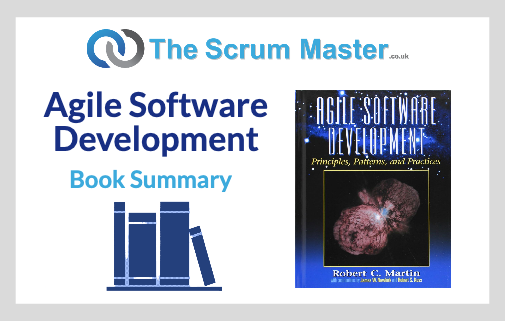
Robert C. Martin’s *Agile Software Development: Principles, Patterns, and Practices* is one of the foundational texts in the world of modern software craftsmanship. It weaves together the philosophy of Agile, the discipline of object-oriented programming, and the practical guidance developers need to build flexible, maintainable systems. The book provides a roadmap for developers and teams who want to deliver working software that is both high quality and adaptable to change. Rather than being just a book about coding, it is a book about thinking—about how to design systems and teams that thrive in uncertainty.
The Essence of Agile Development
At its heart, Agile software development is about responding to change and valuing collaboration over rigid plans. Martin places great emphasis on the Agile Manifesto and its underlying values: individuals and interactions, working software, customer collaboration, and responding to change. He frames these not as vague ideals but as concrete principles that can guide daily work.
For Martin, Agile is not about speed or cutting corners. It is about professionalism. It is the recognition that software is a living, evolving entity, and therefore, the structures we build should allow for continuous evolution. Agile development means writing software that can be changed quickly and safely, ensuring the team can respond to shifting requirements without fear of breaking the system.
The Role of Principles in Software Design
A major portion of the book focuses on principles that help software remain robust and adaptable. Martin revisits and expands on his well-known SOLID principles, which have become cornerstones of modern software design. Each principle serves as a safeguard against rigidity and fragility in code. When followed, these principles help create systems that are easier to understand, test, and modify.
The Single Responsibility Principle ensures that each class or module has one reason to change. The Open/Closed Principle encourages developers to make systems open for extension but closed for modification, supporting flexibility without introducing chaos. The Liskov Substitution Principle ensures that derived classes can stand in for their base classes without unexpected side effects. The Interface Segregation Principle discourages large, unwieldy interfaces and promotes smaller, more focused ones. Finally, the Dependency Inversion Principle inverts the traditional dependency structure, allowing higher-level modules to depend on abstractions rather than concrete implementations.
These principles combine to form a mental model for designing software that grows gracefully. They help prevent the “big ball of mud” phenomenon—systems that become so tangled and brittle that any change risks breaking everything.
Patterns and Reusable Design
Building on these principles, Martin explores the concept of design patterns. Patterns are recurring solutions to common problems in software design. They give developers a shared vocabulary for discussing design challenges and provide templates for solving them. Martin draws heavily from the Gang of Four (GoF) patterns but reinterprets them through an Agile lens.
In his view, patterns are not recipes to be followed blindly but tools to be applied judiciously. For example, he discusses the importance of using patterns like Strategy or Observer to decouple components, enhancing flexibility and testability. However, he warns against premature patterning—overengineering systems by introducing abstractions before they are needed. Agile development values simplicity and emergent design, where patterns arise as the system evolves rather than being imposed at the start.
This pragmatic balance between simplicity and sophistication is a recurring theme. Martin reminds us that the best designs are those that serve the current needs of the software while leaving room for future growth. Overdesigning is as harmful as underdesigning, and Agile principles help developers find that equilibrium.
Testing as a Design Activity
One of the most practical and enduring contributions of Martin’s work is his advocacy for test-driven development (TDD). He presents TDD not just as a testing technique but as a design discipline. Writing tests before code forces developers to clarify their intentions, think about how the software will be used, and ensure that their designs are inherently testable.
Martin outlines the TDD cycle: write a failing test, write just enough code to make the test pass, and then refactor to improve the design while keeping all tests green. This cycle creates a rhythm of small, safe steps. It encourages clean code and prevents the accumulation of technical debt. The emphasis on refactoring aligns perfectly with the Agile mindset of continuous improvement.
Through TDD, developers gain immediate feedback about their work. Tests act as a safety net that allows change without fear. They also serve as living documentation, expressing the system’s intended behaviour in an executable form. This aligns with Agile’s focus on working software as the primary measure of progress.
Refactoring and Continuous Improvement
Closely tied to TDD is the concept of refactoring—the process of improving the structure of code without changing its behaviour. Martin views refactoring as a professional obligation. Code that is not refactored regularly decays over time, becoming harder to understand and modify. Agile teams must embrace refactoring as a continuous practice rather than an occasional clean-up exercise.
Martin provides examples of common refactorings and how they can simplify complex systems. He encourages developers to look for code smells—symptoms of deeper design problems—and use refactoring to address them early. This process is not about making code perfect but about keeping it healthy. The goal is to sustain development speed and maintain flexibility as the system evolves.
Responsibility and Professionalism
Underlying all the technical content is a strong message about personal responsibility. Martin frequently reminds readers that software development is a profession, not just a craft. Professionalism means delivering value, maintaining quality, and holding oneself to high ethical standards. Agile methods work only when developers act with integrity and discipline.
He draws an analogy between software developers and engineers in other fields. Just as civil engineers must ensure that bridges are safe, software developers must ensure their systems are reliable and maintainable. Cutting corners in the name of speed or convenience is not Agile; it is negligence. True agility comes from building systems that can adapt, and that adaptability is only possible through disciplined engineering practices.
Agile Design and Architecture
Martin challenges the misconception that Agile development means abandoning architecture. He argues that architecture is essential but should emerge incrementally rather than being fixed up front. Agile design is evolutionary: it grows with the understanding of the problem. Rather than designing for every possible future scenario, developers should design for the known present while keeping options open for the future.
He introduces the concept of “screaming architecture,” where the structure of the code clearly communicates the system’s purpose. The architecture should make it obvious what the system does, not how it does it. This aligns with the principle of expressiveness in code—making intent clear to other developers. An Agile architecture is modular, testable, and adaptable, allowing teams to respond quickly to new information without major rewrites.
Managing Dependencies and Boundaries
A recurring challenge in software systems is managing dependencies between components. Martin offers clear strategies for isolating changes and protecting core business logic from volatility. Through techniques like dependency inversion and boundary abstraction, teams can shield their systems from the ripple effects of change in external systems or frameworks.
He introduces the idea of separating policy from detail. Policy represents the business rules and high-level logic that define the system’s value, while detail represents the technical mechanisms that make it work, such as databases, user interfaces, or third-party libraries. By decoupling these layers, systems become easier to evolve. Teams can change technologies or interfaces without rewriting core business logic. This principle has become central to modern software architecture, influencing concepts such as clean architecture and hexagonal design.
Patterns of Agile Collaboration
Beyond code, Martin discusses how Agile principles apply to team collaboration. He reinforces the value of collective ownership, where everyone on the team feels responsible for the quality of the system. He advocates for continuous integration, where changes are integrated and tested frequently to detect issues early. These practices reduce integration risk and promote transparency.
He also explores the human side of Agile development. Communication, trust, and feedback loops are essential. Pair programming and code reviews are not merely quality checks—they are opportunities for learning and shared understanding. Agile development is as much about how teams work together as it is about how they write code.
Clean Code and Sustainable Pace
The book also foreshadows themes later expanded in *Clean Code*. Martin highlights the moral and economic imperative of keeping code clean. Clean code is simple, readable, and focused on intent. It allows teams to move fast without breaking things. Dirty code, by contrast, slows teams down, increases defects, and erodes confidence. Sustainable development requires investing in code quality every day, not as a one-off project.
Martin promotes a sustainable pace not just in writing code but in maintaining it. Working software should be a source of confidence, not anxiety. By adhering to sound design principles and testing discipline, teams can sustain a rhythm that allows continuous delivery of value without burnout or chaos.
Agility as a Mindset
Ultimately, *Agile Software Development: Principles, Patterns, and Practices* is about mindset as much as method. Martin reminds readers that agility is not achieved through tools or frameworks but through values and habits. It is about continuously seeking better ways to deliver value, to communicate, and to adapt. Principles and patterns are useful only when grounded in a commitment to professionalism and learning.
The book bridges the gap between Agile philosophy and practical engineering. It teaches developers to see software as a living system and themselves as its caretakers. Through principles, patterns, and disciplined practice, they can build systems that stand the test of time and change.