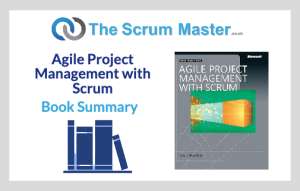
Ken Schwaber’s *Agile Project Management with Scrum* is one of the most practical and experience-driven guides to implementing Scrum in real-world projects. As one of the co-creators of Scrum, Schwaber distils his years of hands-on experience into a series of case studies, insights, and hard-learned lessons. The book is not theoretical; it is a pragmatic look at what happens when Scrum meets reality, including both successes and struggles. It explains how Scrum transforms traditional project management and offers clear guidance on how to manage projects in a complex, ever-changing environment.
From Control to Adaptation
Schwaber begins by contrasting traditional project management with the Agile approach. In traditional environments, managers attempt to plan, predict, and control everything from the outset. This approach assumes that requirements are stable, progress can be measured against a plan, and deviations indicate failure. However, software development rarely fits that pattern. Requirements evolve, technologies change, and teams learn as they build. Trying to control this complexity with rigid plans often leads to frustration and failure.
Scrum, by contrast, embraces change. It acknowledges that uncertainty is unavoidable and uses an empirical process to manage it. The framework is built on three pillars: transparency, inspection, and adaptation. By making progress visible, inspecting frequently, and adapting based on what is learned, teams can navigate complexity more effectively. Schwaber emphasises that Scrum does not remove the need for management—it changes the nature of management. Instead of controlling tasks, managers create the environment for teams to self-organise and deliver value incrementally.
The Scrum Framework Explained
At the core of the book is a clear and practical description of how Scrum works. Schwaber explains that Scrum is not a methodology but a framework—a lightweight structure within which people can solve complex problems. It defines roles, events, and artefacts that support iterative and incremental development.
The three key roles are the Product Owner, the Scrum Master, and the Development Team. The Product Owner is responsible for maximising the value of the product and managing the Product Backlog. The Scrum Master is a servant-leader who ensures Scrum is understood and used effectively, helping the team remove impediments and focus on outcomes. The Development Team is cross-functional, self-organising, and responsible for turning backlog items into increments of working software.
Scrum operates through a series of events that create a regular rhythm of planning, delivery, and reflection. The Sprint is the heartbeat of Scrum—a timeboxed iteration, usually lasting two to four weeks, during which the team delivers a potentially shippable increment. Each Sprint begins with a Sprint Planning meeting, where the team defines a Sprint Goal and decides what can be achieved. Daily Scrums keep the team aligned and focused on progress. The Sprint Review inspects the outcome with stakeholders, while the Sprint Retrospective allows the team to reflect on how to improve its process.
These roles and events are supported by artefacts that provide transparency and focus. The Product Backlog is an ordered list of everything needed in the product. The Sprint Backlog captures the items selected for the Sprint and the plan for delivering them. The Increment represents the sum of all completed work that meets the Definition of Done. Schwaber’s explanation is simple but powerful: Scrum creates a system of accountability and continuous learning through short, inspectable cycles.
Empirical Management in Action
One of the key ideas in *Agile Project Management with Scrum* is that Scrum applies empirical process control to software development. Empiricism relies on observation and evidence rather than prediction. Instead of trying to forecast the entire project at the beginning, Scrum teams deliver small increments, inspect the results, and adapt. Each Sprint becomes an experiment that provides feedback about the product, the process, and the team.
Schwaber provides real-world examples of how this approach reduces risk. By delivering something usable every few weeks, teams expose their assumptions early. Stakeholders see tangible progress, which fosters collaboration and trust. Problems surface quickly rather than being hidden until late in the project. Empirical management replaces the illusion of control with genuine visibility and responsiveness.
This shift can be uncomfortable for traditional project managers who are used to detailed plans and control mechanisms. Schwaber acknowledges this and provides practical advice on how managers can adapt. Their role becomes one of enabling, supporting, and protecting the team’s ability to deliver. Managers must learn to trust empirical data and accept that plans will change as new information emerges.
Real-World Case Studies
The most engaging parts of the book are Schwaber’s case studies, drawn from real organisations implementing Scrum. These stories bring the framework to life and reveal both its power and its challenges. They show that Scrum is not a magic solution but a framework that exposes problems and forces teams to confront them.
In one example, a company introduced Scrum but struggled because management continued to interfere with the team’s self-organisation. The Scrum Master had to educate leaders on the importance of autonomy and focus. In another case, teams failed to deliver working increments because they lacked a clear Definition of Done. Schwaber highlights how each dysfunction—whether it is unclear priorities, overcommitment, or lack of collaboration—is made visible by Scrum’s transparency. The framework does not solve these problems automatically; it surfaces them so they can be addressed.
These stories illustrate a key lesson: Scrum’s simplicity can be confronting. Many organisations resist the discipline it demands. They may adopt Scrum in name but fail to embrace its principles. Schwaber calls this “ScrumBut”—teams saying “we use Scrum, but…” to justify ignoring core elements. The book repeatedly reinforces that Scrum works only when its rules are applied consistently and its values are lived daily.
The Role of the Scrum Master
Schwaber devotes significant attention to the role of the Scrum Master, which he describes as both misunderstood and essential. The Scrum Master is not a project manager or team lead but a coach and facilitator. Their job is to ensure the team follows Scrum principles, remove impediments, and help the organisation understand Agile values. This often involves difficult conversations and cultural change.
In the case studies, successful Scrum Masters demonstrate persistence and empathy. They help teams focus on delivering value, encourage transparency, and protect the team from external pressure. They also work with management to align expectations with reality. Poor Scrum Masters, on the other hand, either act as command-and-control managers or disengaged administrators. Schwaber’s message is clear: the Scrum Master is the guardian of the process, not the boss of the team.
He also stresses that great Scrum Masters help teams learn to manage themselves. Over time, they should become less directive and more supportive, allowing the team to take increasing responsibility for improvement. This approach builds resilience and creates an environment where teams can thrive without constant supervision.
Delivering Business Value
Another recurring theme is the focus on delivering value rather than completing tasks. Traditional project management often measures success by adherence to scope, budget, and schedule. In contrast, Scrum defines success as delivering working software that provides real value to the customer. The Product Owner plays a central role in this by maintaining a well-ordered Product Backlog and ensuring the team is always working on the most valuable items.
Schwaber stresses that effective Product Owners combine vision with pragmatism. They understand the needs of stakeholders, articulate clear goals, and make tough prioritisation decisions. They must be available to the team and engaged in continuous dialogue. Poor Product Ownership—such as unclear priorities, lack of authority, or weak engagement—can undermine Scrum entirely.
The book also discusses the importance of measurable outcomes. Instead of asking whether the team completed all the planned features, Scrum asks whether the delivered product is useful, usable, and valuable. Regular feedback loops with stakeholders allow the Product Owner to adjust priorities and steer the product toward maximum impact.
Managing Change and Resistance
Introducing Scrum into an organisation often triggers resistance. Schwaber explains that Scrum changes not only how projects are managed but also how power and accountability are distributed. Managers may feel threatened by self-organising teams, and developers may struggle with the increased visibility of their work. These cultural challenges can be more difficult than the technical ones.
Schwaber advises starting with one pilot project to demonstrate success and build credibility. As teams learn and improve, the approach can be expanded. He warns against imposing Scrum from the top down without understanding its principles, as this leads to mechanical adoption rather than genuine agility. True transformation requires leadership support, patience, and a willingness to confront uncomfortable truths about how work gets done.
In several of the case studies, Scrum exposes hidden problems such as unrealistic deadlines, unclear requirements, or conflicting priorities. While this can create tension, it also provides an opportunity for improvement. Schwaber encourages leaders to see Scrum as a mirror that reflects reality. If the reflection is unpleasant, the problem lies not with Scrum but with the underlying system.
Measuring Progress and Success
Schwaber redefines how progress is measured in Agile projects. Instead of tracking percentage completion or earned value, Scrum focuses on delivering increments of working software. Each Sprint produces something tangible that can be inspected and evaluated. Velocity—the measure of how much work a team completes per Sprint—provides empirical data for forecasting, but it should not be used as a target or performance metric.
He cautions against turning velocity into a management goal, as this encourages gaming and undermines trust. Instead, teams should use it to improve planning and predictability. True progress is visible in the Increment itself and in the team’s ability to sustain delivery over time. Success in Scrum is measured by customer satisfaction, quality of output, and the team’s capacity for continuous improvement.
Scrum as a Framework for Continuous Learning
Perhaps the most important message in *Agile Project Management with Scrum* is that Scrum is a framework for learning. Each Sprint provides a learning cycle—about the product, the process, and the people. The transparency and feedback built into Scrum turn every iteration into an opportunity for growth. Teams learn what works and what does not, adapting their approach incrementally.
Schwaber positions Scrum as an ongoing journey rather than a one-time change. Teams that persist with it develop discipline, resilience, and agility. Over time, they build a culture of openness and experimentation that extends beyond software projects. The framework becomes a way of thinking—empirical, collaborative, and focused on delivering value.
Through his case studies and reflections, Schwaber demonstrates that Agile project management is not about less management but better management. It shifts the focus from prediction and control to learning and adaptation. By embracing transparency, iteration, and collaboration, teams can navigate complexity and deliver meaningful outcomes consistently.