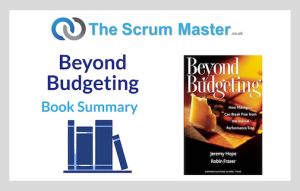
In Beyond Budgeting: How Managers Can Break Free from the Annual Performance Trap, Jeremy Hope and Robin Fraser challenge one of the most entrenched practices in management: the annual budgeting process. They argue that traditional budgeting systems, rooted in command-and-control thinking, are ill-suited to today’s dynamic business environment. Instead, they propose a radical shift toward more adaptive and decentralised management models that empower people, respond to change, and deliver sustained performance.
The book presents the Beyond Budgeting model as both a critique of old practices and a practical guide to building a more agile, human, and performance-driven organisation. It encourages leaders to rethink how they set targets, allocate resources, and evaluate results—replacing rigid financial plans with continuous planning, adaptive controls, and a culture of trust and accountability.
The Problem with Traditional Budgeting
Traditional budgeting emerged in the early 20th century as a way to control costs and manage industrial production. However, what worked for factories in the 1920s fails to support organisations competing in a fast-changing, knowledge-based economy. Hope and Fraser describe how annual budgets have become barriers to innovation, agility, and motivation.
The budgeting process is typically long, bureaucratic, and expensive. Managers spend months negotiating numbers that are out of date by the time they are approved. The result is a fixed performance contract—targets and spending limits that lock teams into assumptions made many months earlier. When market conditions shift, these plans often become irrelevant or counterproductive.
The authors explain that budgets are used for too many conflicting purposes at once: target setting, forecasting, and resource allocation. Trying to meet these multiple goals with one process leads to compromised decisions. For example, managers may sandbag targets to ensure bonuses, or hoard resources in case future funding is uncertain. The focus shifts from improving performance to gaming the system.
The annual budget also reinforces a culture of control and compliance rather than empowerment and accountability. Leaders at the top dictate what must be achieved, while managers below focus on meeting budget numbers rather than delivering real customer or business value. Hope and Fraser argue that this creates a performance trap—organisations become so busy managing the budget that they stop managing the business.
The Beyond Budgeting Philosophy
Beyond Budgeting is not about doing budgeting better—it is about doing management differently. Hope and Fraser’s model is built on 12 principles that fall into two categories: leadership principles that guide culture and people, and process principles that redefine planning and control.
The leadership principles promote decentralisation, empowerment, and a focus on purpose and values rather than detailed rules. Leaders should trust their people to make decisions close to the customer, aligning them through shared goals and transparency rather than micromanagement.
The process principles replace fixed budgets with adaptive systems. Instead of setting annual targets, companies use relative performance measures that compare teams against peers or benchmarks. Forecasting becomes continuous and rolling rather than annual. Resource allocation is based on need and opportunity, not on fixed annual budgets. The goal is to create an organisation that is always learning, adapting, and improving.
From Fixed Targets to Relative Goals
One of the biggest shifts Beyond Budgeting proposes is to abandon fixed annual targets. In a volatile world, it is unrealistic to lock in specific numbers a year ahead. Instead, Hope and Fraser recommend using relative goals—comparing performance to competitors, market averages, or past performance.
For example, instead of aiming to increase sales by 10%, a company might aim to grow faster than the industry average. This encourages teams to focus on outperforming the market rather than hitting an arbitrary number. It also reduces gaming and manipulation, since results are judged in context rather than against static targets.
Relative goals promote continuous improvement rather than year-end evaluations. Performance becomes a living process, encouraging people to learn, adapt, and push boundaries rather than protect their budget position.
Rolling Forecasts and Continuous Planning
Forecasting in traditional budgeting systems is often an exercise in fiction. Managers predict future numbers months in advance, knowing that real life rarely follows the plan. These forecasts then become commitments, creating pressure to meet them regardless of changing circumstances.
Beyond Budgeting organisations replace static annual forecasts with rolling forecasts that are updated frequently—often quarterly or monthly. The purpose of forecasting shifts from performance evaluation to learning and decision-making. The goal is not to predict the future perfectly but to understand trends and adjust plans as conditions change.
Rolling forecasts are based on key business drivers rather than line-item expenses. They give leaders real-time visibility into where the organisation is heading and enable faster, data-informed decisions. When new opportunities or risks appear, resources can be redirected immediately rather than waiting for the next budget cycle.
Decentralised Resource Allocation
One of the most radical ideas in Beyond Budgeting is to stop allocating resources through annual budgets altogether. Instead of giving departments fixed amounts of money for the year, organisations move to a more flexible approach based on need and opportunity.
Teams are empowered to make local decisions within agreed boundaries. Funding is allocated dynamically, with approvals based on business cases and expected value rather than pre-set limits. Some companies create internal markets where teams effectively compete for resources by presenting their proposals to peers or leadership.
This decentralisation requires trust and transparency, but it dramatically improves responsiveness. Teams no longer waste time fighting for next year’s budget but focus on delivering outcomes that create value now.
Performance Evaluation and Rewards
Traditional budgeting systems often tie bonuses and rewards to the achievement of budget targets. This creates powerful incentives to manipulate numbers, delay investments, or shift results between periods. Hope and Fraser argue that this system destroys intrinsic motivation and teamwork.
In a Beyond Budgeting organisation, performance is evaluated holistically and relative to peers, not against fixed commitments. Rewards are based on team performance, long-term results, and contribution to shared goals rather than individual short-term targets. This encourages collaboration and reduces internal competition.
Some companies use multi-factor evaluations that combine financial and non-financial indicators, including customer satisfaction, innovation, and employee engagement. The key is to focus on real value creation, not on meeting accounting-based milestones.
Empowerment and Decentralised Decision-Making
A core theme of Beyond Budgeting is the shift from central control to local empowerment. In dynamic markets, decision-making must be fast and informed by real customer insight. Centralised bureaucracies cannot keep pace with rapid change.
Hope and Fraser advocate pushing authority as close to the front line as possible. Teams that serve customers should have the freedom to act within clear principles and boundaries. The role of leaders shifts from commanding to enabling—creating the conditions for teams to succeed rather than directing every move.
Transparency is crucial. When everyone can see performance data, comparisons, and results, control happens through peer accountability rather than hierarchical oversight. Trust replaces detailed rules as the foundation of governance.
This approach requires cultural change. Leaders must learn to let go of control, and teams must take ownership of results. But the payoff is significant: faster decisions, higher engagement, and greater innovation.
Case Studies and Real-World Examples
The authors illustrate the Beyond Budgeting model through real-world case studies from companies that have successfully broken free from the annual performance trap.
Swedish bank Handelsbanken is a flagship example. Since the 1970s, it has operated without budgets, central targets, or traditional incentives. Local branches have full autonomy to make decisions that best serve their customers. Performance is measured against competitors rather than fixed goals. As a result, Handelsbanken has consistently outperformed its rivals in profitability and customer satisfaction for decades.
Other companies, such as Borealis (a European chemical company) and Statoil (now Equinor), have adopted Beyond Budgeting principles to create more agile management systems. These organisations found that removing budgets improved flexibility, collaboration, and long-term performance.
These examples demonstrate that Beyond Budgeting is not an academic theory but a practical model that can be implemented in large, complex organisations. Success depends on leadership commitment, cultural alignment, and a willingness to rethink deeply held assumptions about control and accountability.
The Cultural Shift: From Control to Trust
Beyond Budgeting is as much about culture as it is about systems. Traditional budgeting reflects a belief that people cannot be trusted and must be controlled through detailed plans and rules. In contrast, Beyond Budgeting assumes that people are capable, responsible, and motivated by purpose.
Leaders must move from being controllers to coaches. Instead of asking “Did you stick to the plan?” they ask “What did you learn and how can we improve?” This shift requires clarity of purpose, transparency of information, and shared values that guide behaviour.
Hope and Fraser emphasise that trust is not blind. It is supported by open information, relative performance measurement, and accountability to peers. When people are trusted and given autonomy, they take ownership of their results.
Implementing Beyond Budgeting
Transitioning away from traditional budgeting can be challenging. Many organisations fear losing control or accountability. The authors suggest a phased approach, starting with experiments in specific areas rather than attempting a full transformation overnight.
Common starting points include replacing annual budgets with rolling forecasts, introducing relative performance targets, or decentralising certain decisions. Over time, as trust and confidence grow, organisations can expand these practices across all functions.
Hope and Fraser caution that Beyond Budgeting is not a one-size-fits-all framework but a set of guiding principles. Each organisation must adapt them to its context, culture, and strategy. What matters most is the mindset—embracing flexibility, transparency, and empowerment as the path to sustained success.
Relevance to Agile and Scrum
The principles of Beyond Budgeting align closely with Agile and Scrum thinking. Both reject rigid plans and embrace adaptability, learning, and decentralisation. Scrum teams, like Beyond Budgeting organisations, work iteratively, inspect and adapt frequently, and focus on delivering customer value rather than adhering to fixed predictions.
In an Agile context, Beyond Budgeting provides a financial and management model that supports rather than constrains agility. It enables organisations to fund teams flexibly, measure outcomes dynamically, and build a culture of trust and accountability that mirrors Scrum values.
By moving beyond the budget, leaders can unlock the full potential of Agile ways of working—creating organisations that learn continuously, respond rapidly, and empower people to deliver meaningful results.