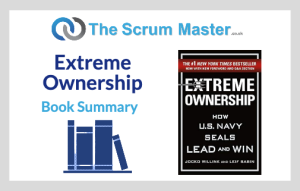
Extreme Ownership: How U.S. Navy SEALs Lead and Win by Jocko Willink and Leif Babin is one of the most practical and hard-hitting books on leadership ever written. Drawing from their experiences as SEAL officers leading combat missions in Iraq, the authors reveal the principles that allowed them to succeed under immense pressure and show how those same lessons apply to business and everyday life. The central idea is simple but transformative: leaders must take complete responsibility for everything in their world. There is no one else to blame. This mindset, which they call “extreme ownership,” is the foundation of effective leadership.
Willink and Babin argue that leadership is the single greatest factor in whether any team succeeds or fails. When leaders take ownership of outcomes, admit mistakes and hold themselves accountable, teams learn, adapt and improve. When leaders blame others or make excuses, dysfunction spreads. The book blends gripping battlefield stories with clear, actionable lessons for leading teams in any environment.
The Essence of Extreme Ownership
At its core, extreme ownership is about accepting full responsibility for results. Leaders cannot control every variable, but they can always control their actions and responses. When things go wrong, the leader looks inward, not outward. If the mission fails, it is their fault — because they either failed to communicate clearly, failed to plan effectively or failed to ensure understanding.
This mindset is not about self-blame; it is about empowerment. When leaders accept ownership, they gain the power to change outcomes. They stop waiting for others to fix problems and start taking action to address them. In the military, this attitude saves lives. In business, it creates accountability, trust and performance.
Willink and Babin describe how this principle played out in real combat situations. During operations in Ramadi, Iraq, they led SEAL teams in some of the most dangerous missions imaginable. When friendly forces mistakenly fired on one another, Jocko Willink immediately took responsibility, even though others had made errors. By doing so, he created clarity, restored trust and prevented further chaos. The same principle applies in any organisation — when leaders own mistakes, they create a culture where others do the same.
No Bad Teams, Only Bad Leaders
One of the most powerful lessons in the book is that there are no bad teams, only bad leaders. Leadership sets the tone for everything that happens within a group. A strong leader can take an underperforming team and turn it around, while a poor leader can destroy even the most talented team.
Willink and Babin illustrate this with a story from SEAL training. During a gruelling exercise known as “boat crew races,” one team consistently came last while another won every time. The instructors swapped the leaders of the two teams. Instantly, the struggling team began to win, and the previously dominant team fell back. Nothing else changed — only the leadership.
The point is clear: performance problems are leadership problems. When teams fail, leaders must first examine their own actions. Did they communicate expectations clearly? Did they inspire and support their people? Did they hold everyone accountable to the same standard? Great leaders build cohesion, trust and belief in the mission. They lead by example and take responsibility for outcomes.
For Scrum Masters, Product Owners or agile leaders, this principle translates directly. If a team is underperforming, the first question should not be “what’s wrong with the team?” but “what can I do differently as a leader to enable better results?”
Believe in the Mission
No team can perform effectively unless its members believe in the mission. If people don’t understand or buy into what they are doing, their effort will always fall short. Leaders must ensure that everyone knows not just what they are doing, but why it matters.
Willink and Babin describe situations where orders from higher command seemed unclear or misguided. Instead of complaining or blindly following, they sought to understand the intent behind those orders. Once they could see how the mission aligned with broader strategic goals, they communicated that purpose to their teams. When people understand the “why,” they can act with conviction and make decisions aligned with the mission.
In business, this principle is just as vital. When teams are told to deliver a project or build a feature without understanding its purpose, motivation and creativity suffer. Leaders must translate strategic goals into clear, meaningful objectives. They must connect the work to the customer, the organisation’s vision and the desired impact. Belief drives commitment. Without it, execution becomes mechanical and uninspired.
Check the Ego
Ego is one of the biggest barriers to effective leadership. It causes leaders to make decisions based on pride rather than reason, to resist feedback and to blame others for problems. Willink and Babin are blunt: ego clouds judgment and destroys teamwork.
In high-stakes environments like combat, ego can be deadly. A leader who refuses to listen to subordinates or admit mistakes risks mission failure. The authors learned that humility is essential. Strong leaders have the confidence to lead but the humility to learn. They take criticism, ask questions and recognise that others may have better ideas.
In agile teams, this principle is equally important. A Scrum Master who insists on being right or a Product Owner who ignores feedback will quickly erode trust. Great leaders focus on results, not recognition. They set ego aside and prioritise the success of the mission and the team over personal pride.
Cover and Move
One of the foundational principles in SEAL operations is “cover and move” — the idea that different units must work together, supporting one another to achieve a shared goal. If one team moves forward while another provides cover, both survive and succeed. If they act independently, they fail.
In business, “cover and move” means teamwork and collaboration across departments and functions. Too often, teams operate in silos, optimising for their own success rather than the organisation’s. Sales blames marketing, marketing blames engineering, and progress stalls.
Willink and Babin stress that leaders must break down these silos and ensure everyone understands that they are part of one team. Success depends on cooperation and mutual support. Agile organisations embrace this principle naturally — cross-functional teams working together toward shared outcomes rather than individual KPIs.
Simple, Clear Plans
Complex plans fail because people cannot remember or execute them under pressure. The authors learned in combat that simplicity is essential. Plans must be easy to understand and communicate so that every person knows what to do, even when things go wrong.
Leaders often overcomplicate strategies, assuming that detail equals sophistication. But complexity breeds confusion, and confusion leads to mistakes. The best leaders make plans simple, clear and focused on the essentials. They ensure everyone understands their role and the overall intent.
In agile product development, this principle applies directly to communication. Sprint goals, product visions and user stories should be clear, concise and easily understood. If a team cannot articulate the goal simply, it probably does not understand it well enough to execute effectively.
Prioritise and Execute
When chaos strikes, leaders can easily become overwhelmed. The key is to prioritise and execute. Willink and Babin describe firefights where multiple crises unfolded simultaneously. Instead of trying to tackle everything at once, they focused on the highest priority problem, solved it, and then moved on to the next.
This disciplined approach prevents panic and ensures steady progress even under extreme pressure. The principle applies to any high-stakes environment — from managing product launches to responding to organisational crises.
In complex situations, leaders must step back, assess and decide what matters most right now. They communicate those priorities clearly to the team and act decisively. As the situation changes, they reassess and reprioritise. Agile methodologies naturally reflect this approach — focusing on incremental delivery, adapting to change and tackling the most valuable work first.
Decentralised Command
A key aspect of leadership in the SEALs is decentralised command — empowering those closest to the action to make decisions. In fast-moving, complex situations, leaders cannot control every detail or issue constant orders. Instead, they must trust subordinates to understand the mission and act accordingly.
In business, this translates to empowering teams. Leaders set intent and boundaries, but teams decide how to achieve the goals. This autonomy builds ownership, speed and accountability. The alternative — micromanagement — slows everything down and erodes trust.
Willink and Babin emphasise that decentralised command only works when leaders at every level understand the mission and the broader context. Communication and alignment are vital. Teams must know not only what to do but why it matters, so their decisions remain aligned with the overall strategy.
For agile teams, this principle is central. Scrum teams operate with autonomy within a shared framework. Product Owners define the vision and goals; teams decide how to deliver them. When trust and alignment are strong, decision-making happens faster and innovation thrives.
Plan, Communicate and Lead Up and Down the Chain
Leadership flows both ways. Leaders must communicate clearly not just down the chain of command to their teams, but also up the chain to senior leaders. Subordinates need direction; superiors need information.
Willink and Babin call this “leading up and down the chain of command.” It means keeping everyone informed, aligned and aware of what is happening. Leaders must take responsibility for ensuring understanding at every level. If a team misunderstands instructions or a manager makes a poor decision due to lack of context, the fault lies with the communicator.
In the corporate world, this principle prevents misalignment and confusion. Teams should regularly communicate progress, risks and needs upward, while leaders must share strategy, priorities and intent downward. Transparency keeps everyone moving in the same direction.
Discipline Equals Freedom
One of Jocko Willink’s most famous sayings is “discipline equals freedom.” It captures a paradox at the heart of effective leadership. Discipline — consistent habits, structure and accountability — creates the foundation for flexibility and success. Without discipline, chaos reigns.
In the military, discipline ensures readiness and precision. In business, it ensures focus and consistency. Teams that plan well, follow processes and uphold standards can move faster and adapt more effectively because they are not constantly reacting to avoidable problems.
Agile frameworks reflect this balance perfectly. Regular cadence, defined roles and transparent processes create the discipline that enables creativity and responsiveness. Freedom emerges from structure, not from its absence.
Leadership as Ownership
Throughout Extreme Ownership, Willink and Babin return to one core truth: leadership is ownership. Whether you are leading a team of soldiers, software developers or salespeople, your success depends on taking responsibility for everything that happens.
When leaders adopt this mindset, they inspire others to do the same. Teams become proactive rather than reactive. Problems are solved rather than avoided. Accountability becomes a shared value rather than a burden.
Extreme Ownership is not just a leadership philosophy — it is a way of operating in the world. It teaches that responsibility, humility, discipline and teamwork are the foundations of success. Whether on the battlefield or in business, the principles remain the same: own the mission, lead by example and never pass the blame.