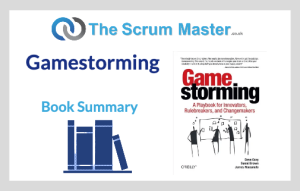
Gamestorming: A Playbook for Innovators, Rulebreakers, and Changemakers by Dave Gray, Sunni Brown, and James Macanufo is a practical guide for anyone seeking to inject creativity, collaboration, and energy into their meetings and workshops. The book reframes the idea of work as play and presents a rich collection of structured yet flexible techniques—known as “games”—that help teams explore problems, generate ideas, and make decisions in a more engaging way. Rather than relying on rigid corporate meeting structures, Gamestorming encourages curiosity, experimentation, and collaboration through playful but purposeful activities.
At its core, the book teaches that innovation happens when people interact in new ways. By using structured games, facilitators can help teams navigate complex challenges, spark insights, and break out of habitual thinking patterns. It provides not only a toolbox of activities but also a mindset for designing and leading creative sessions that produce meaningful results.
Why Gamestorming Matters
In most organisations, meetings are dull, predictable, and dominated by a few voices. Creativity suffers because participants rarely feel safe or inspired to think differently. Gamestorming challenges this status quo by treating meetings as design opportunities rather than administrative rituals. The authors argue that the same principles that make games engaging—clear goals, rules, roles, and feedback—can make meetings far more productive and enjoyable.
When teams use play strategically, they loosen constraints, explore alternatives, and access deeper creativity. Play is not about wasting time; it is about creating a safe environment for experimentation and discovery. Gamestorming provides a structure for this play, ensuring that even though the activities are fun, they are always directed toward meaningful outcomes. The result is faster learning, stronger engagement, and better decision-making.
The Anatomy of a Game
Every game in the book follows a consistent structure. There is a clear objective or outcome, a set of rules to guide participation, materials to use, and defined roles for facilitators and participants. Games generally follow three broad stages: opening, exploring, and closing.
In the opening phase, the goal is to set the stage and invite participation. This often involves breaking the ice, clarifying the challenge, and aligning on objectives. The exploring phase is where participants generate ideas, make connections, and discover insights. Closing involves synthesising what has been learned, prioritising actions, and committing to next steps.
This structure ensures that games do not descend into chaos. The facilitator acts as the game master—guiding the process, adjusting the flow, and helping participants stay focused. The book repeatedly emphasises that good facilitation is about balancing freedom with boundaries. Too many rules kill creativity; too few create confusion. A well-run game maintains just enough structure to keep energy directed toward outcomes.
Principles of Effective Gamestorming
Gamestorming is built around several foundational principles that guide how to use games effectively in professional settings. First, visuals matter. Drawing, mapping, and using sticky notes externalise thinking, making abstract ideas visible and shareable. The authors encourage everyone to draw—even if they believe they cannot—because visual language enhances understanding and stimulates creative thinking.
Second, questions drive progress. Instead of rushing to answers, the best sessions focus on asking the right questions. Games help teams explore the problem space, surface assumptions, and frame challenges from different perspectives before deciding on solutions.
Third, participation is key. Innovation does not happen in isolation, and great ideas rarely come from the same few people who always speak up. Games create inclusive environments where everyone can contribute, often through hands-on activities that bypass hierarchy and ego.
Finally, iteration and reflection ensure progress. A game session is not about getting everything right on the first try. It is about experimenting, learning, and improving. After each session, facilitators are encouraged to reflect on what worked, what didn’t, and how the experience could be improved.
Preparing for a Gamestorming Session
Planning a successful gamestorming session involves thoughtful preparation. The facilitator begins by defining the challenge or goal: what needs to be explored, understood, or decided? Next, they select the appropriate games from the playbook based on the type of problem and the stage of the process.
The physical or virtual space also matters. The authors recommend large walls, plenty of sticky notes, pens, and flexible seating. These elements support movement, collaboration, and spontaneous idea generation. In digital environments, tools such as virtual whiteboards can replicate this interactivity.
Setting expectations is also essential. Participants should understand that the session will be different from a typical meeting. They will be asked to think visually, collaborate actively, and suspend judgement during creative phases. The facilitator’s tone should encourage openness and curiosity, helping people feel comfortable enough to take creative risks.
Opening Games: Setting the Stage
The opening phase establishes trust, focus, and a sense of shared purpose. Common opening games include Icebreakers, which loosen up the group, and Context Setters, which clarify the challenge at hand.
One popular opening game is “The Five Whys”, where participants repeatedly ask “why?” to uncover the root cause of a problem. Another is “Draw the Problem”, which asks participants to sketch their understanding of an issue, exposing different perspectives and assumptions early on. These activities create alignment while stimulating engagement through visual thinking.
Opening games are short and energetic, designed to shift people from passive to active mode. They help break down barriers, encourage participation, and prepare the group for deeper exploration.
Exploring Games: Generating and Organising Ideas
The exploring phase is the heart of gamestorming. Here, teams diverge to generate a wide range of ideas, then converge to identify patterns, insights, and potential solutions. The authors describe many creative and analytical games for this stage.
Games like “Brainwriting” and “Post-up” allow individuals to generate ideas quietly and simultaneously, reducing groupthink. “Affinity Mapping” helps cluster ideas into themes. “Mind Mapping” visualises relationships between concepts, while “SWOT Analysis” and “Business Model Canvas” provide structure for strategic exploration.
The authors also include imaginative exercises like “Role Storming”, where participants adopt fictional roles—customers, competitors, or even celebrities—to generate fresh perspectives. Another game, “Empathy Mapping”, helps teams understand user motivations, pains, and behaviours, grounding innovation in real human experience.
Exploring games often feel playful, but their purpose is serious. They create psychological safety, encourage lateral thinking, and uncover insights that traditional analysis might miss.
Closing Games: Turning Ideas into Action
Closing games move the group from exploration to decision. After generating ideas, the team must evaluate, prioritise, and commit. This phase translates creativity into concrete next steps.
Games such as “Dot Voting” help the group quickly identify the most promising ideas by giving each participant a limited number of votes. “Action Planning” then turns selected ideas into practical plans, outlining who will do what and when. “Storyboard” and “Customer Journey Mapping” visualise how proposed solutions will play out in the real world, revealing gaps and dependencies.
Closing games ensure that sessions end with clarity and accountability. Without this step, even the most creative sessions risk becoming fun but unproductive exercises. Gamestorming’s strength lies in bridging imagination with execution.
The Role of the Facilitator
Facilitators are the linchpin of any gamestorming session. Their job is not to control the outcome but to design and manage the process. They must balance structure with flexibility—guiding participants through the flow of the game while remaining responsive to emerging dynamics.
Good facilitators use visual tools, timeboxing, and active listening to keep energy high and progress steady. They also manage group behaviour—ensuring that quieter voices are heard, dominant participants do not take over, and conflicts become productive rather than personal.
The authors highlight that facilitation is both art and science. It requires empathy, adaptability, and a willingness to let go of personal opinions. A facilitator’s goal is to help the group think together, not to dictate what they should think.
Designing Your Own Games
While the book provides a library of ready-made games, the authors encourage readers to design their own. Every team and challenge is unique, and creativity often flourishes when games are adapted or combined.
Designing a game starts with identifying the objective. The facilitator then defines the constraints: time, materials, and number of participants. Next come the rules that shape interaction and focus attention. Finally, the facilitator tests and refines the game through practice.
This design process reflects the core philosophy of gamestorming: work is a form of play, and every play experience can evolve. As teams gain confidence, they will naturally invent games that fit their culture and challenges.
Gamestorming in Practice
Gamestorming is not just for creative industries. The techniques apply in almost any environment—corporate strategy sessions, agile retrospectives, design workshops, classrooms, and even executive planning.
In agile teams, for instance, games like “Sailboat” or “Speedboat” retrospectives turn routine ceremonies into reflective and engaging experiences. In product development, visual techniques such as “Customer Journey Mapping” and “Prototyping” help teams align around customer needs.
Gamestorming also supports innovation at scale. When organisations face complex problems, games create shared understanding and accelerate decision-making. They make invisible assumptions visible and transform diverse perspectives into actionable insights.
Mindset Over Method
Although the book provides hundreds of games, the deeper message is about mindset. Gamestorming encourages people to view challenges as opportunities for exploration. The best outcomes emerge not from rigid planning but from curiosity, collaboration, and iteration.
This mindset aligns closely with agile and design thinking principles. Both emphasise experimentation, feedback, and continuous learning. Gamestorming provides the practical tools to embody these values in daily work.
Ultimately, the authors show that the future of innovation depends on how people work together. By approaching collaboration as play, we unlock creativity and problem-solving capacity that traditional methods suppress. Work becomes more human, more energising, and more effective.