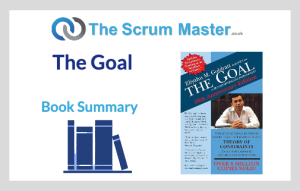
Few business books have had as lasting an impact as *The Goal: A Process of Ongoing Improvement* by Eliyahu M. Goldratt. Presented as a novel rather than a traditional management textbook, it tells the story of Alex Rogo, a plant manager struggling to save his manufacturing facility from closure. Through his journey, Goldratt introduces the Theory of Constraints (TOC), a powerful framework for identifying and removing bottlenecks to improve performance in any system. Though set in the world of manufacturing, the lessons from *The Goal* have become essential reading for leaders in every field, including software development, Agile, and product management.
The Story and Its Central Lesson
Alex Rogo’s factory is in crisis. Orders are late, productivity is low, and his team is demoralised. Senior management has given him three months to turn things around, or the plant will be shut down. As Alex wrestles with these challenges, he encounters Jonah, a former physics professor who becomes his mentor. Jonah doesn’t give Alex direct answers but instead guides him with questions that force him to rethink what productivity, efficiency, and improvement truly mean.
Jonah helps Alex see that his plant’s problems stem from a flawed understanding of how systems work. Most organisations focus on local efficiencies—keeping every machine, person, or department busy. But this often creates excess work-in-progress, delays, and chaos. The real goal of the organisation is not to maximise individual performance but to improve the flow of work through the entire system. From this realisation, Alex begins to rebuild his factory’s processes, focusing on identifying and eliminating constraints—the parts of the system that limit overall throughput.
The Theory of Constraints Explained
Goldratt’s Theory of Constraints is built on a simple but profound idea: every system has at least one constraint that limits its overall performance. In manufacturing, this might be a specific machine that cannot keep up with demand. In software development, it might be a slow review process or a lack of clarity in requirements. If you can identify and address this constraint, you can dramatically improve the system’s output without major investment or restructuring.
The process for managing constraints follows five key steps. First, identify the system’s constraint—the bottleneck that determines how fast work can flow. Second, exploit the constraint by making sure it is always working on the highest-priority items and never idle. Third, subordinate all other activities to the constraint, aligning the rest of the system so that nothing overloads or starves it. Fourth, elevate the constraint by investing in improvements that expand its capacity. Finally, once a constraint is broken, return to the first step, because another constraint will emerge. This cycle is the essence of ongoing improvement.
The brilliance of TOC lies in its clarity. Instead of trying to fix everything at once, it encourages focus on the single point that truly matters. It teaches that improvement is not about maximising local efficiency but about optimising global performance—the flow of value from start to finish.
Measuring What Matters
Jonah introduces Alex to three key performance measures that replace traditional accounting metrics. Throughput refers to the rate at which the system generates money through sales. Inventory represents all the money tied up in materials, work-in-progress, or finished goods waiting to be sold. Operational expense includes all the money spent to turn inventory into throughput.
In most companies, financial reports and efficiency metrics distort reality. Managers celebrate busy machines and high utilisation, but these do not necessarily lead to more sales or profit. Goldratt shows that the real goal of any business is to make money by increasing throughput while simultaneously reducing inventory and operational expense. Every decision should be tested against this goal. If it increases throughput, reduces inventory, or cuts operational expense without harming the others, it is a good decision.
This shift in measurement transforms how Alex and his team view performance. They stop chasing local efficiencies and instead focus on actions that increase flow through the constraint. They discover that sometimes allowing idle time in one area can improve the overall system. This mindset aligns perfectly with Agile and Lean thinking, where flow, feedback, and continuous improvement matter more than simple busyness.
Flow and the Power of Synchronisation
One of the most memorable lessons from *The Goal* comes from a simple hiking analogy. On a scout hike, Alex notices that the group’s pace is limited by the slowest boy, Herbie. No matter how fast the others walk, the group cannot reach the destination until Herbie does. This moment helps Alex see that his factory operates the same way: the overall speed is limited by the slowest step in the process.
By placing Herbie at the front and redistributing his load, Alex ensures a steady flow and keeps the group together. This represents synchronisation—aligning the pace of work to the system’s constraint to prevent bottlenecks and excess inventory. In modern Agile teams, this same idea appears as work-in-progress limits, pull systems, and cadence alignment. It is about achieving smooth flow rather than chaotic bursts of activity.
Applying TOC in Practice
When Alex begins applying these ideas, he faces resistance. Supervisors are used to maximising output at their own stations, believing that more production means more efficiency. It takes time to convince them that idle machines and smaller batches can actually improve performance. Once they begin to see results—faster delivery times, fewer delays, and less chaos—the team’s mindset shifts.
Through careful observation, Alex and his team identify the factory’s main constraint: a heat treatment machine that slows down the entire process. They reorganise workflows to ensure that this machine always has the right materials and is never waiting for upstream work. They also stop flooding it with too much input from other processes. By coordinating everything around this constraint, throughput improves, lead times shorten, and customer satisfaction grows.
This experience shows that improvement is less about adding resources and more about managing flow intelligently. Instead of spreading effort thinly across many problems, focusing on the constraint delivers immediate and measurable gains. The same principle applies in knowledge work. A software development team might find that testing, deployment, or stakeholder review is the true constraint. Once identified, improving that area unlocks better overall performance.
The Human Element of Improvement
Goldratt’s novel is not just about systems and processes. It also explores the human and leadership challenges of change. Alex struggles with burnout, strained relationships, and resistance from his team. His journey highlights that improvement is as much about people as it is about processes.
Leaders must communicate clearly, challenge assumptions, and involve others in problem-solving. Jonah’s coaching style—asking questions rather than giving orders—helps Alex and his team learn to think for themselves. This approach aligns strongly with the servant leadership mindset promoted in Scrum and Agile. Rather than directing, the leader creates the conditions for learning and ownership.
Alex also learns the importance of collaboration across departments. Sales, production, and finance must work as a single system rather than competing silos. When the plant improves performance, but sales continue to push unrealistic delivery promises, problems reappear. Goldratt uses this to show that constraints can exist anywhere in the business, not just on the shop floor. Real improvement requires systemic thinking and cross-functional alignment.
Continuous Improvement as a Mindset
By the end of the book, Alex’s plant not only survives but thrives. Yet Jonah reminds him that improvement never ends. Solving one constraint only reveals the next. The process of ongoing improvement is a cycle, not a destination.
This philosophy is timeless and universal. In Agile and Scrum, it mirrors the concept of empirical process control—transparency, inspection, and adaptation. Teams regularly inspect their progress, identify constraints or blockers, and adapt their process to improve flow and value delivery. The Theory of Constraints offers a structured way to apply this empiricism at both team and organisational levels.
The book also shows that improvement does not require massive investment. Most of Alex’s changes involve better coordination, communication, and prioritisation rather than new machines or major restructuring. Similarly, many Agile teams achieve better outcomes by limiting work in progress, clarifying priorities, and improving feedback loops—simple but powerful shifts that enhance focus and flow.
Lessons for Modern Agile and Product Teams
Although *The Goal* was written in the 1980s, its lessons resonate strongly in today’s digital and Agile environments. Every organisation has constraints that limit its ability to deliver value quickly and effectively. These might include slow decision-making, unclear priorities, overburdened specialists, or outdated approval processes.
Applying TOC in an Agile context begins with identifying the team’s biggest bottleneck to delivering customer value. This could be a slow testing process, dependencies between teams, or a lack of access to users for feedback. Once identified, the team focuses its improvement efforts there, ensuring that all other work supports this priority. When the bottleneck shifts elsewhere, the process continues.
The book’s emphasis on aligning metrics with the true goal is also critical. Many teams still track activity-based measures—velocity, utilisation, or the number of stories completed—rather than outcomes such as customer satisfaction, lead time, or business impact. Goldratt’s insight encourages leaders to ask whether their metrics truly measure progress toward the goal or simply promote local optimisation.
Finally, *The Goal* reinforces the importance of thinking systemically. Just as Alex’s factory had to coordinate across functions, Agile teams must look beyond their immediate scope. Dependencies, handoffs, and misaligned incentives can all become constraints. System-level thinking allows teams to see the bigger picture and make smarter trade-offs that improve flow across the whole organisation.
A Timeless Framework for Improvement
*The Goal* endures because it captures the essence of continuous improvement in a simple, story-driven way. Its message transcends manufacturing and applies equally to knowledge work, product development, and organisational leadership. The Theory of Constraints teaches that improvement is about focus—understanding what truly limits performance and aligning the system to overcome it.
In a world where complexity and change are constant, Goldratt’s approach remains a reliable guide. Whether you are managing a factory, leading a software team, or improving an Agile organisation, the same principles hold true: find the constraint, focus your efforts, and keep improving. The process never ends, and that is exactly what makes it powerful.