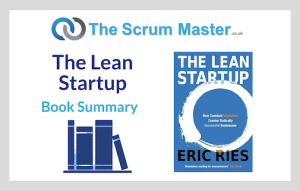
Eric Ries’ The Lean Startup: How Today’s Entrepreneurs Use Continuous Innovation to Create Radically Successful Businesses has become a foundational text for entrepreneurs, innovators, and leaders seeking to build successful products in uncertain environments. The book challenges traditional approaches to business planning, replacing long-term forecasting and rigid execution with experimentation, learning, and adaptability. Ries offers a systematic method for creating products and services that truly meet customer needs, while minimising waste and maximising learning.
At its core, the Lean Startup methodology is built on three ideas: entrepreneurs exist everywhere, entrepreneurship is a form of management, and validated learning is the ultimate measure of progress. Whether applied to a start-up, a corporate innovation team, or a public sector initiative, these principles help teams move faster, learn quicker, and make better decisions.
The Problem with Traditional Startups
Traditional business approaches assume that success comes from careful planning, detailed forecasting, and flawless execution. Entrepreneurs spend months or even years perfecting business plans and building products before launching them to the public. Yet, in reality, most of these plans collapse upon contact with customers. The problem, Ries argues, is that traditional management is designed for environments where outcomes are predictable. Start-ups operate under conditions of extreme uncertainty, where neither the product, the customer, nor the market is fully known.
The Lean Startup approach addresses this uncertainty through iterative cycles of learning. Instead of creating a static plan, entrepreneurs run a continuous series of experiments designed to validate or refute their assumptions. Success comes not from executing a rigid plan but from learning what works and adapting accordingly. This shift from prediction to experimentation marks the fundamental difference between traditional entrepreneurship and the Lean Startup approach.
The Build-Measure-Learn Feedback Loop
The central mechanism of the Lean Startup is the Build-Measure-Learn feedback loop. This cycle transforms ideas into products, measures how customers respond, and uses that feedback to decide whether to pivot or persevere. It replaces lengthy planning with a dynamic, learning-driven process.
The loop begins with an idea or hypothesis. Instead of building a full-featured product, the team creates a Minimum Viable Product (MVP) – the simplest version that allows them to test their assumptions. The goal is not to launch a perfect product but to learn as quickly as possible whether the idea resonates with customers.
Once the MVP is in customers’ hands, the next step is to measure how they respond. Ries distinguishes between vanity metrics and actionable metrics. Vanity metrics, such as total sign-ups or website traffic, may look impressive but do not necessarily reflect true progress. Actionable metrics, on the other hand, provide insight into customer behaviour and help the team make informed decisions.
Finally, the team learns from the results. They analyse the data to determine whether their assumptions were correct. If the hypothesis is validated, they continue to refine the idea and build upon it. If not, they pivot – making a strategic change to the product, customer segment, or business model while maintaining the core vision.
The key to this process is speed. The faster a team can move through the Build-Measure-Learn loop, the faster it can adapt and improve. This rapid iteration is what enables Lean Startups to outpace competitors and respond effectively to change.
The Minimum Viable Product
One of the most influential concepts in the book is the Minimum Viable Product. The MVP allows teams to start the learning process as early as possible by releasing a product that is good enough to test an assumption but not fully developed.
Ries emphasises that an MVP is not a prototype for internal review or a half-finished product released prematurely. It is a learning tool. The goal is to validate key hypotheses about customer needs and behaviours without investing unnecessary time and resources. By testing ideas early, teams avoid building features or products that no one wants.
Examples of MVPs vary widely. They can be simple landing pages that test interest, videos that demonstrate a concept, or limited versions of a product released to early adopters. Dropbox, for instance, famously began as a video explaining how the service would work. The video generated thousands of sign-ups, proving that there was strong demand before the team wrote most of the code.
The MVP approach forces teams to confront reality. Rather than hiding behind assumptions, they put their ideas in front of customers and learn what truly matters.
Validated Learning
Validated learning is the process of demonstrating progress through evidence rather than opinion. It shifts the focus from delivering outputs to learning what customers actually value.
Every start-up begins with a series of hypotheses – assumptions about who the customers are, what problems they face, and what solutions will appeal to them. Validated learning involves testing these assumptions through experiments and collecting data to confirm or refute them.
For example, a team might hypothesise that users will pay for a new subscription feature. Instead of fully developing it, they could test the idea by offering a pre-order or survey to gauge willingness to pay. The outcome provides evidence that guides further decisions.
Validated learning transforms the way teams think about progress. Instead of asking, “Are we on schedule?” they ask, “Have we learned something valuable about our customers?” Progress is measured by learning, not by the volume of work completed.
Innovation Accounting
Traditional accounting measures success through financial metrics such as revenue or profit. However, in the early stages of a start-up, these numbers are often meaningless. A new product may not yet have significant revenue, even if it is learning rapidly and moving toward success. To solve this problem, Ries introduces the concept of innovation accounting – a system for measuring progress when financial returns are not yet visible.
Innovation accounting involves three key steps. First, establish a baseline by collecting data on how the product performs today. Second, run experiments to improve those metrics and measure the impact. Third, make an evidence-based decision to pivot or persevere based on whether the improvements are sufficient.
This structured approach ensures that learning is measured and managed systematically. It also provides transparency for investors and stakeholders, showing that progress is being made even when traditional metrics lag behind.
Pivot or Persevere
One of the most challenging decisions in any start-up is whether to pivot or persevere. A pivot is a fundamental change in strategy designed to test a new hypothesis while retaining the core vision of the business. It is not a sign of failure but of learning.
Ries identifies several types of pivots. A zoom-in pivot focuses on a single feature that proves more valuable than the product as a whole. A zoom-out pivot expands the product to include additional features or use cases. Other pivots include customer segment pivots, where a different audience proves more receptive, and platform pivots, where the company changes from offering a product to providing an infrastructure for others.
The decision to pivot should be based on data, not emotion. Teams often resist change because they are attached to their original ideas. However, persisting with an unvalidated hypothesis leads to waste. The Lean Startup framework helps teams make objective, evidence-based decisions that increase their chances of long-term success.
Lean Thinking and Waste Reduction
Ries draws inspiration from Lean manufacturing principles developed by Toyota, particularly the focus on eliminating waste. In a start-up context, waste refers to anything that does not contribute to learning about customers. This includes unnecessary features, excessive documentation, or overproduction of ideas without validation.
By focusing on rapid experimentation and feedback, Lean Startups eliminate waste and increase efficiency. Continuous deployment, automated testing, and small batch sizes allow teams to deliver improvements quickly and safely. Instead of waiting for large releases, they release small updates frequently, learning from each one.
This iterative process not only improves products faster but also reduces risk. Each small release provides an opportunity to gather feedback, detect issues, and adjust direction before major investments are made.
Building a Sustainable Business
The ultimate goal of the Lean Startup approach is to build a sustainable business model. This means creating a system that can grow through continuous innovation while maintaining adaptability.
Ries explains that sustainability comes from finding a repeatable, scalable way to acquire and retain customers. Once a start-up achieves product-market fit – the point where customers are consistently buying, using, and recommending the product – it can shift from experimentation to optimisation.
At this stage, traditional management techniques become more relevant. The focus moves to scaling operations, refining processes, and expanding market reach. However, the Lean mindset of experimentation and learning remains essential. Even mature companies must continue to test assumptions and adapt to change.
Lean Startup in Established Organisations
While the book focuses on start-ups, Ries emphasises that the Lean Startup principles apply equally to large organisations. Many established companies struggle with innovation because they rely on rigid structures and fear of failure. Lean Startup offers a way to foster entrepreneurship within large enterprises by creating small, cross-functional teams that operate with autonomy and accountability.
These teams use the same principles of MVPs, validated learning, and innovation accounting to explore new opportunities. By treating each new initiative as an experiment, large organisations can innovate without risking their core business.
Ries calls this approach the “start-up within the enterprise.” It allows established companies to combine the resources of scale with the agility of a start-up, fostering a culture of continuous improvement.
The Role of Leadership
Leadership in a Lean Startup environment requires a shift from command and control to empowerment and trust. Leaders must create a culture that values learning over certainty and experimentation over perfection. They should set clear vision and goals while allowing teams to discover how best to achieve them.
Ries argues that leaders must also manage innovation as a portfolio. Not every experiment will succeed, but each one contributes to learning. By balancing short-term execution with long-term discovery, leaders can ensure that their organisations remain both productive and innovative.