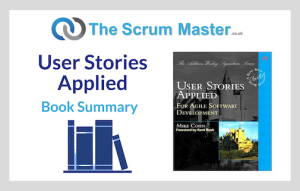
In User Stories Applied: For Agile Software Development, Mike Cohn presents a clear and practical guide to one of the most effective ways to define and manage software requirements in Agile environments. The book explains how user stories enable collaboration, flexibility, and shared understanding between developers, product owners, and users. It replaces lengthy, rigid documentation with lightweight, conversation-driven requirements that adapt as projects evolve.
Why User Stories Matter
Traditional software requirements often fail because they rely too heavily on written documentation and upfront detail. Long specification documents may seem precise, but they often lead to misunderstandings, rework, and wasted effort. Cohn argues that words alone are a poor medium for describing complex systems. Instead, Agile teams need to talk regularly with their customers and users.
A user story provides just enough written information to serve as a reminder for a future conversation. Rather than trying to specify every detail upfront, stories promote collaboration and learning as the team progresses. They make it possible to plan and estimate work while leaving room for change and discovery. Cohn’s central message is simple: communication builds better software than documentation. By using user stories, teams focus on outcomes that matter to users rather than on producing documents that no one reads.
What Is a User Story?
A user story is a short, simple description of a feature told from the perspective of the person who needs it. It usually follows a format such as:
As a [type of user], I want [an action] so that [a benefit].
This structure keeps the focus on the user and their goals rather than on technical details. A good user story is short enough to fit on a note card but powerful enough to guide development and testing. Cohn emphasises that user stories are not requirements specifications. They are placeholders for conversation. The details emerge later through discussions between developers, testers, and product owners. The conversation is where understanding happens.
The INVEST Principles
To help teams write effective user stories, Cohn builds on Bill Wake’s INVEST acronym. Each story should be:
Independent, meaning it can be developed separately from others
Negotiable, leaving room for discussion and change
Valuable, providing clear benefit to the user or customer
Estimatable, small enough to be understood and estimated
Small, so it fits comfortably within a sprint or iteration
Testable, with clear acceptance criteria that can be verified
These characteristics make stories flexible and manageable, allowing teams to adapt without losing focus.
Finding and Writing Stories
Writing good user stories begins with understanding the users. Cohn introduces user role modelling, a technique for identifying distinct types of users who interact with the system. Once roles are identified, the team can brainstorm stories that describe what each role needs to achieve. When access to real users is limited, teams can work with user proxies such as customer support staff, domain experts, or product managers. These proxies can represent user needs, but they must stay grounded in real-world behaviour and feedback. Cohn offers practical techniques for gathering stories, including interviews, questionnaires, observation, and collaborative workshops. Story-writing workshops are particularly valuable because they bring developers and users together to discuss needs in real time.
Acceptance Tests and Definition of Done
Every story needs clear acceptance criteria that define what it means to be complete. Acceptance tests serve as the bridge between product understanding and verification. They describe expected behaviour and help confirm that a story has been implemented correctly. Cohn recommends writing acceptance tests before coding begins. This ensures the team agrees on what success looks like and avoids ambiguity later. Testing becomes a shared activity, not an afterthought.
Guidelines for Writing Better Stories
Cohn provides a wealth of advice for improving story quality. Some key principles include:
Start with goal-oriented stories that describe user intent rather than technical steps.
Slice the cake vertically, meaning deliver complete pieces of functionality that provide user value rather than separating work into technical layers.
Keep the user interface out of early stories to avoid premature design decisions.
Write in active voice and focus on a single user per story.
Keep stories concise but meaningful, leaving details for future discussion.
By following these guidelines, teams maintain flexibility while ensuring stories remain practical and focused.
Estimating with Story Points
Once stories are written, they need to be estimated so the team can plan releases and sprints. Cohn advocates using story points rather than hours. Story points measure relative effort or complexity instead of precise time. Teams estimate together, comparing new stories to previous ones to maintain consistency. Estimation is not about prediction but about learning. As the team works, they measure their velocity — how many story points they complete in an iteration — to forecast future delivery realistically.
Cohn reminds teams to estimate as a group. This encourages shared understanding and avoids overreliance on individual opinions.
Planning Releases and Iterations
With estimates in hand, teams can plan releases and sprints. A release plan defines what can be delivered in the next few months, while an iteration plan defines what will be delivered in the next sprint.
Cohn stresses that planning in Agile is not about committing to fixed scope and deadlines. It is about forecasting based on evidence and adjusting as reality changes. The Product Owner prioritises stories based on value and risk, ensuring that the most important work is done first. Iteration planning focuses on selecting stories that fit within the team’s capacity and defining the tasks needed to deliver them. The goal is always to produce working software at the end of each iteration.
Measuring Progress and Velocity
Agile teams track progress through velocity — the number of story points completed per iteration. This helps them understand their capacity and adjust expectations. Cohn suggests using simple charts like burndown or burnup charts to visualise progress. These provide transparency and make it easier to spot issues early. Velocity is not a target to be gamed but a reflection of the team’s pace, which improves naturally as collaboration and understanding grow.
Common Pitfalls and Story Smells
Cohn dedicates a section of the book to identifying “story smells” — warning signs that stories may need improvement. Examples include:
Stories that are too small or too large
Stories that depend heavily on each other
Including unnecessary details or premature design decisions
Users or customers who struggle to prioritise stories
Developers taking over writing stories instead of collaborating with customers
Recognising these smells early allows teams to adjust before they cause bigger problems.
Why User Stories Work
Cohn contrasts user stories with older methods like IEEE 830 requirements specifications or use cases. Those methods often result in long documents that discourage discussion. User stories, by contrast, encourage conversation and collaboration. They work because they are human-centred, simple, and adaptable. They are written in everyday language that everyone can understand, which builds shared understanding across roles. Stories also fit perfectly with iterative development. Large ideas can start as high-level epics and later be split into smaller stories as understanding grows. This flexibility keeps work aligned with user needs and business goals.
Integrating Stories with Scrum
Cohn shows how user stories align naturally with Scrum. Stories form the items in the Product Backlog, representing features the team might deliver. During sprint planning, the team selects stories for the sprint backlog, ensuring that each story is small enough to complete within the sprint. Daily Scrums provide opportunities to discuss progress and obstacles, while sprint reviews use completed stories to demonstrate value to stakeholders. Cohn includes a case study showing how Scrum and user stories reinforce each other. Scrum provides the process framework; user stories provide the content that drives the work.
Advanced Topics
The book also addresses topics such as handling non-functional requirements, using digital or physical story cards, managing stories for bugs, and linking user stories with user interface design. Cohn recommends using the same principles for all types of stories: keep them small, focused, and tied to user value. Even technical or infrastructure work can often be expressed in story form if the outcome benefits the user or the business.
The Value of Conversation
Perhaps the most important lesson from the book is that user stories are not about documentation but about communication. They create a shared language between developers and users, fostering collaboration and trust. Stories build tacit knowledge — the unspoken understanding that emerges from regular interaction. This kind of knowledge cannot be captured in documents. It grows naturally as teams talk, reflect, and adapt.
Applying User Stories in Practice
Cohn concludes by showing how to bring everything together through an extended example project. He demonstrates how to identify user roles, write stories, estimate them, plan releases, and test completed functionality. The process is iterative, empirical, and collaborative. It focuses on learning rather than prediction and on people rather than paperwork. Teams that apply these principles can expect clearer priorities, faster feedback, and software that truly meets user needs.
User Stories Applied remains one of the most practical and influential books on Agile development. Mike Cohn transforms what could be an abstract concept into an actionable approach for any team seeking to build better products through collaboration. By shifting the focus from documents to dialogue, from requirements to relationships, Cohn shows how user stories make Agile work in the real world. User stories remind us that software development is not just about code; it is about understanding people and solving their problems together.