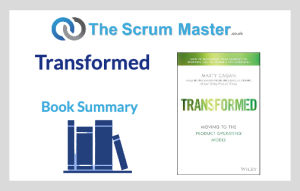
Marty Cagan’s Transformed: Moving to the Product Operating Model is a bold and practical guide for leaders who want to turn their organisations into truly empowered, product-driven companies. It builds on his earlier works, Inspired and Empowered, but focuses more on transformation at scale. Whereas Inspired taught how great product teams work, and Empowered described how to lead them, Transformed explains how to move an entire organisation from traditional, project-based delivery to a modern product operating model.
Cagan and his co-authors, Chris Jones, Lea Hickman and Jon Moore, draw on decades of experience working with some of the world’s leading technology companies. They argue that most enterprises are still stuck in outdated ways of working, driven by projects, budgets and output rather than empowered teams, customer outcomes and business impact. The book provides a clear roadmap for leaders who want to make this shift successfully.
The Need for Transformation
Cagan begins by describing a familiar reality. Many organisations say they are adopting “agile” or “digital transformation,” but in truth, little changes. Teams still take orders, deliver projects and are judged by output, not by whether their work makes a difference to customers or the business. Leaders still plan by features and deadlines rather than by outcomes and learning.
The result is predictable: slow delivery, disengaged teams and wasted investment. Organisations that operate this way cannot compete with product-led companies like Amazon, Netflix or Spotify, which thrive on empowered teams and rapid experimentation. Cagan calls this the “delivery trap” — the illusion of progress that comes from delivering lots of features without knowing whether they create value.
The product operating model is presented as the solution. It is not just about adopting agile practices or hiring product managers. It requires a complete rethink of how an organisation sets goals, structures teams, measures success and empowers people. The transformation must be led from the top and sustained through cultural and structural change.
The Product Operating Model
The product operating model is built around empowered, cross-functional product teams that are accountable for outcomes rather than tasks. These teams are small, typically including a product manager, product designer and engineers, supported by specialists as needed. Each team owns a specific problem space and has the autonomy to discover, prioritise and deliver solutions that create measurable impact.
This model contrasts sharply with the traditional project model, where work is funded, planned and executed in isolated initiatives. In the project model, teams deliver what they are told, often with little understanding of the customer problem or the strategic intent. Once the project is “done,” the team disbands, losing valuable context and momentum.
Cagan explains that true product organisations operate continuously, not in projects. Teams own long-term outcomes such as improving conversion, retention or satisfaction. They are funded by mission, not by project. Leadership focuses on defining strategic intent and empowering teams to figure out how to achieve it.
To succeed, organisations must rewire their operating model around a few key principles: empowered product teams, product strategy over roadmaps, outcome-based goals, strong product leadership and an enabling culture of trust and learning.
From Projects to Products
Transitioning from projects to products is the heart of the transformation. Cagan warns that this is not a cosmetic change. Rebranding project managers as product managers or renaming teams “squads” does not create a product company. True transformation means redefining how work is funded, prioritised and evaluated.
In a project world, success is measured by delivery against scope, time and budget. In a product world, success is measured by outcomes — the changes in user behaviour or business results that the work delivers. This shift requires new thinking about value and measurement. Instead of asking “What did we build?” teams must ask “What changed because of what we built?”
Cagan outlines a practical progression. Organisations can start by identifying areas where continuous ownership makes sense, such as customer experience or internal platforms. They then form durable product teams around these areas, give them a clear mission and empower them to discover solutions. Funding moves from one-off projects to ongoing investment in these teams. Over time, more of the organisation adopts this model until projects are replaced by a network of empowered, outcome-driven teams.
The Role of Leadership
Leadership plays a decisive role in transformation. Cagan stresses that empowerment does not mean lack of leadership; it means a different kind of leadership. Leaders must move from directing work to creating conditions for success. Their job is to set clear strategic context, ensure alignment and develop capable teams.
He divides leadership responsibilities into three areas: providing vision, defining strategy and enabling execution. Vision gives teams a sense of purpose. Strategy provides focus by identifying the key problems to solve. Execution involves supporting teams with the right environment, skills and trust to deliver outcomes.
Cagan argues that many leaders undermine transformation by clinging to control. They want agile teams but still dictate roadmaps and deadlines. True empowerment requires trust. Leaders must resist the urge to micromanage and instead focus on ensuring teams understand the “why” behind their work.
He also highlights the importance of strong product leadership at every level. Product leaders — such as Heads of Product or Chief Product Officers — must coach and develop their product managers, set clear expectations and champion customer-centric, evidence-based decision-making. They are the link between executive intent and team execution.
Empowered Teams
At the heart of the product operating model are empowered teams. Cagan defines empowerment not as freedom to do whatever you want but as accountability for solving customer and business problems within clear constraints. Empowered teams understand the outcome they are responsible for, the strategy behind it and the boundaries within which they can operate.
Each team combines discovery and delivery. Discovery involves identifying customer problems, testing ideas and validating solutions through evidence. Delivery involves building, launching and iterating solutions at pace. Teams continuously move between these modes, learning and adapting as they go.
Cagan insists that empowerment depends on competence. Teams cannot be empowered if they lack skills or context. Leaders must invest in developing strong product managers, designers and engineers who can think strategically and work collaboratively. Coaching and mentoring are essential to maturity.
Empowered teams also depend on alignment. Clear strategic intent ensures that autonomy does not lead to chaos. Cagan describes this balance as “aligned autonomy” — teams are free to decide how to achieve goals, but not free to choose which goals to pursue. Leadership defines the “why” and “what,” while teams own the “how.”
The Role of Product Discovery
Product discovery is a central theme across Cagan’s work, and Transformed reinforces its importance. Discovery is how teams learn what to build before committing resources to delivery. It involves exploring customer problems, generating ideas, testing assumptions and using evidence to make decisions.
In the project model, discovery is often skipped or replaced by upfront requirements gathering. Teams jump straight into building features without validating whether they solve the right problem. The result is waste — products that deliver little or no value.
In the product model, discovery is continuous and lightweight. Teams use techniques like interviews, prototypes and A/B tests to learn quickly and cheaply. The goal is not to be right the first time but to reduce risk through evidence. Cagan describes four key risks every product must address: value (will customers buy or use it?), usability (can they use it?), feasibility (can we build it?) and viability (will it work for the business?).
By addressing these risks early, empowered teams make better decisions and avoid costly rework. Discovery creates a learning loop that turns uncertainty into insight.
The Role of Technology
A modern product operating model depends on technology that enables speed, experimentation and learning. Cagan emphasises the need for strong engineering culture and modern technical practices such as continuous delivery, automated testing and platform thinking.
He argues that engineering is not a service function but a creative discipline integral to product success. Engineers must be involved in discovery, not just delivery. Their technical insight helps shape what is possible and drives innovation.
Many organisations struggle here because they treat technology as a cost centre rather than a source of competitive advantage. In the product model, technology is the enabler of agility, scalability and innovation. Leaders must ensure that teams have the tools and autonomy to move fast and experiment safely.
Transforming the Organisation
Moving to the product operating model requires deliberate organisational change. Cagan outlines the steps companies must take, from aligning leadership to restructuring teams and funding models. The transformation cannot be delegated to a project or a consultant; it must be owned by the leadership team collectively.
He proposes starting with a pilot. Select a few areas where empowered product teams can deliver quick wins and use their success to build momentum. Learn from the experience, refine the model and expand gradually. Transformation takes years, not months, but progress compounds as more teams adopt the new ways of working.
Cagan also warns against partial transformation. Many companies adopt agile ceremonies or rename roles without changing underlying structures. True transformation means shifting how the organisation thinks about value, risk and decision-making. It demands courage to let go of control, trust teams and focus on outcomes over output.
Measuring Success
Measurement is critical to sustaining transformation. In the old model, success is measured by delivery metrics — features shipped, deadlines met or budgets spent. In the new model, success is measured by outcomes: changes in customer behaviour, business performance and learning velocity.
Cagan advocates the use of objectives and key results (OKRs) to align teams and track progress. Well-defined OKRs link strategic intent to measurable outcomes, providing focus without prescribing solutions. Teams are evaluated not on how many features they build but on whether they move the metrics that matter.
This outcome-based approach creates a culture of accountability and continuous improvement. Teams become motivated by impact rather than activity. It also enables honest conversations about what is working and what is not, which fuels learning across the organisation.
The Human Side of Transformation
Finally, Cagan addresses the human element. Transformation is not just a structural or process change; it is a cultural shift. It challenges deeply held beliefs about control, hierarchy and expertise. Leaders must manage this change with empathy, communication and persistence.
Transformation often feels uncomfortable because it redistributes power. Managers who once made decisions about what to build may feel uncertain in a model that empowers teams. Cagan advises leaders to view this not as loss of control but as evolution — from directing to enabling, from command to coaching.
The payoff is significant. Organisations that make the shift unlock speed, innovation and engagement. Teams become motivated by purpose and ownership. Customers benefit from products that truly solve their problems. The business gains resilience and adaptability in an uncertain world.
Marty Cagan’s Transformed is ultimately a guide to leadership in the modern era. It calls for courage, humility and a relentless focus on value. By moving from projects to empowered product teams, organisations can stop merely delivering and start transforming.