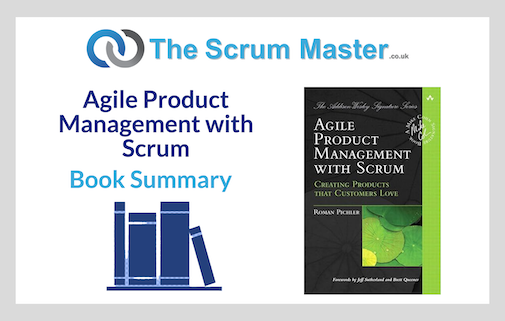
In Agile Product Management with Scrum: Creating Products That Customers Love, Roman Pichler redefines how product management fits within agile environments. The book focuses on the Product Owner role, explaining how it differs from traditional product management and how it enables organisations to deliver value through focus, collaboration, and customer-centricity. Pichler’s writing is practical, concise, and supported by real-world insights from companies such as Salesforce and SAP.
Why Agile Product Management Is Different
Traditional product management is often fragmented across roles — marketing, product, and project management — leading to silos, long planning cycles, and late feedback. Agile changes everything. Scrum makes one person — the Product Owner — accountable for the product’s success. Instead of thick requirement documents and long lead times, Scrum encourages lightweight planning, continuous learning, and frequent feedback loops.
Pichler contrasts old-school management with the agile approach. In traditional models, discovery happens upfront, requirements are fixed, and customer feedback arrives late. In Scrum, discovery is ongoing. The Product Backlog evolves constantly as new information emerges from users and the market. Customer feedback comes early and often through sprint reviews and regular releases.
This iterative model recognises that change is inevitable. The best way to manage it is not to resist it but to embrace it — adjusting plans as teams learn more about what customers truly value.
Understanding the Product Owner Role
The Product Owner is the single point of accountability for the product’s success. This role bridges the gap between business and development, guiding the Scrum Team toward building the right thing at the right time.
Pichler draws from Ken Schwaber’s definition: “The Product Owner is responsible for managing the Product Backlog and ensuring the value of the work the team performs.” On the surface, this sounds simple, but its implications are profound. The Product Owner leads the effort to create value.
This means:
- Defining and communicating a compelling product vision
- Prioritising work to maximise value delivery
- Collaborating with stakeholders, customers, and the Scrum Team
- Continuously refining the Product Backlog
To be effective, Product Owners must blend strategic insight with hands-on execution. They are visionaries and doers, leaders and collaborators. They must balance competing interests, negotiate trade-offs, and make tough calls with incomplete information.
Traits of a Great Product Owner
Pichler identifies the characteristics that distinguish successful Product Owners. They must be visionary yet grounded — able to inspire others while keeping priorities clear. They must be communicators and negotiators who can unite diverse perspectives.
Crucially, they must be empowered and available. The Product Owner cannot be a distant stakeholder who only appears at sprint reviews. They need to engage daily with the team, making decisions and providing clarity. Without this presence, teams drift, priorities blur, and value delivery suffers.
Common Mistakes in Product Ownership
Many organisations misunderstand or under-support the Product Owner role. Pichler categorises the most frequent pitfalls:
- The Underpowered Product Owner: lacks authority to make decisions, leading to constant delays and rework.
- The Overworked Product Owner: spreads attention too thin across multiple teams or projects.
- The Proxy Product Owner: acts as a go-between for another decision-maker, undermining accountability.
- The Product Owner Committee: replaces one empowered decision-maker with a group, diluting clarity and slowing down delivery.
Each of these situations weakens Scrum’s effectiveness. The solution is to ensure a single, empowered Product Owner with a clear mandate.
Building and Communicating the Product Vision
A strong product vision aligns everyone involved and serves as a compass for decision-making. Pichler advises that a good vision should be shared, broad, engaging, and concise. It tells a story about what the product aims to achieve and why it matters.
Creating this vision often involves techniques like:
- Personas and scenarios to understand user needs
- Vision boxes or mock-ups to visualise the product
- The Kano Model to balance essential and delightful features
The goal is to define the Minimal Marketable Product — the smallest release that delivers meaningful value to customers. Focusing on simplicity helps teams build what matters most first and reduce waste.
Working with the Product Backlog
The Product Backlog is the engine of Scrum. Pichler describes it as DEEP — Detailed appropriately, Estimated, Emergent, and Prioritised.
A healthy backlog evolves constantly as the team learns from customer feedback, sprint reviews, and new market insights. Product Owners must continually refine and reorder backlog items based on value, risk, and dependencies.
Pichler offers practical advice for backlog grooming:
- Discover and describe items: work with stakeholders and the team to identify what’s needed.
- Structure effectively: group related items logically, using themes or epics to maintain clarity.
- Prioritise based on value: the most valuable and urgent items should always be at the top.
He warns against common mistakes such as over-detailed requirements, unclear acceptance criteria, or treating the backlog as a dumping ground. Instead, it should be a living, strategic tool — a single source of truth for what the team will deliver next.
Release Planning and Tracking
Scrum replaces rigid project plans with lightweight release planning. The Product Owner defines release goals and decides which features will deliver the most value within the available time and budget.
Pichler encourages focusing on outcomes rather than outputs. Rather than promising a fixed feature set months ahead, Product Owners should forecast what’s likely to be delivered based on team velocity and empirical evidence.
Tracking progress through burndown charts or release burnups helps maintain transparency and adapt plans quickly when circumstances change.
Working with Customers and Stakeholders
Agile product management thrives on collaboration. Product Owners must build strong relationships with users, customers, and internal stakeholders to ensure alignment.
Pichler advises inviting stakeholders to sprint reviews and encouraging continuous feedback. Customer input should not wait until the end of a release — early and frequent interaction ensures that the product evolves in the right direction.
He also notes that the Product Owner should unify strategic and tactical responsibilities. In traditional environments, marketing and product management are often separate. In Scrum, the Product Owner combines both perspectives, supported by marketers or executives as needed. This eliminates handoffs and improves accountability.
Scaling the Product Owner Role
For large products, one Product Owner cannot manage everything. Pichler recommends introducing a Chief Product Owner to coordinate multiple teams. Each team has its own Product Owner responsible for a specific feature set, while the Chief Product Owner ensures alignment across the entire product.
However, he warns against unnecessary complexity. Large projects often lead to bloated communication structures. Wherever possible, start small and scale gradually. Add teams only when the product’s scope truly demands it.
Collaboration and Scrum Events
Product Owners play a vital role in all Scrum events:
- Sprint Planning: collaborating with the team to clarify goals and priorities.
- Daily Scrums: staying connected without micromanaging.
- Sprint Reviews: gathering feedback from users and stakeholders.
- Sprint Retrospectives: reflecting on processes and relationships.
These interactions keep the Product Owner deeply engaged with the team’s progress and challenges, ensuring that each sprint delivers value.
From Product Manager to Product Owner
Transitioning from traditional product management to Scrum requires a mindset shift. Product Owners must embrace uncertainty, learn to release early and often, and welcome change.
In traditional models, success is often measured by sticking to a plan. In Scrum, success is measured by delivering value and learning quickly. Product Owners must be comfortable with incomplete information and able to make decisions based on evidence rather than assumptions.
Pichler highlights examples like Salesforce.com, where the Product Owner role became pivotal in connecting customer needs directly to development teams. By empowering Product Owners, Salesforce reduced cycle times and improved innovation dramatically.
Developing Great Product Owners
Becoming a great Product Owner takes time and organisational support. Leaders must select individuals with the right mix of strategic thinking, decision-making ability, and empathy for users.
Pichler recommends mentoring, peer networks, and communities of practice to help Product Owners grow. He also emphasises that senior managers must champion the role — adjusting structures, job titles, and incentives to align with agile principles.
Companies like SAP and Salesforce had to redefine career paths and titles to recognise the importance of Product Ownership. Without this support, Product Owners often struggle to fulfil their responsibilities effectively.
Reflection and Key Takeaways
Agile Product Management with Scrum challenges traditional thinking about how products are conceived, built, and delivered. The book’s lessons can be distilled into several practical insights:
- The Product Owner is a leadership role, not a clerical one.
- A clear product vision guides everything else.
- The Product Backlog is a dynamic, evolving artefact — not a static document.
- Collaboration and continuous feedback are essential.
- Simplicity beats complexity — focus on what truly delivers value.
- Empowerment and trust are non-negotiable for success.
By combining focus, empirical learning, and strong leadership, Scrum empowers teams to create products customers love. Pichler’s book remains one of the most practical guides available for anyone aspiring to master the Product Owner role or lead product development in an agile organisation.