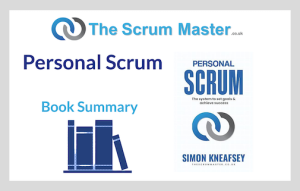
Simon Kneafsey’s Personal Scrum takes the proven principles of Scrum and Agile and applies them to the most complex and important project of all — your own life. Drawing on decades of experience teaching Scrum to organisations such as Google, NASA, and the United Nations, Kneafsey translates team-based agility into a personal productivity system designed to help individuals define success, set meaningful goals, and achieve them through small, focused, and iterative progress.
The book offers a simple yet powerful framework — the Personal Scrum System — that enables anyone to take control of their life and move deliberately toward their goals. It is grounded in empiricism, the belief that knowledge comes from experience and evidence. By applying transparency, inspection, and adaptation to personal development, individuals can live with purpose and intention rather than drift aimlessly or react to external pressures.
From Scrum for Teams to Scrum for Life
Scrum was originally created by Ken Schwaber and Jeff Sutherland to help teams build complex software products. It is now used by millions of people globally to manage all kinds of work. Kneafsey’s insight is that the same principles can help individuals manage their lives. Life is inherently uncertain and complex, just like software development. By working empirically — experimenting, reviewing progress, and adjusting course frequently — individuals can achieve remarkable results over time.
Kneafsey developed the Personal Scrum System after years of applying Scrum practices to his own life. Using it, he became a Professional Scrum Trainer with Scrum.org, founded TheScrumMaster.co.uk, trained tens of thousands of people worldwide, and wrote this very book. His success story is not presented as a boast but as evidence of what is possible when Scrum’s iterative discipline is applied to personal growth.
Redefining Success
The first step in Personal Scrum is defining what success means to you. Kneafsey stresses that success is personal — it varies for each person and changes over time. Many people unconsciously adopt society’s definitions of success, such as wealth, fame, or career advancement, only to discover later that these do not bring fulfilment. Instead, success might mean mastering a craft, maintaining health, building relationships, contributing to others, or finding balance.
He also cautions against the illusion that happiness is a permanent state. Success and happiness are not fixed destinations but continuous pursuits that evolve as we grow. By revisiting goals regularly, we can adapt our definition of success as our priorities shift. The Personal Scrum System encourages this ongoing reflection through its planning events and review cycles.
Setting Clear and Meaningful Goals
Goals sit at the heart of the Personal Scrum System. Without them, people drift, react, and end up helping others achieve their goals rather than their own. Setting goals provides direction, focus, and motivation. Kneafsey distinguishes between strategic goals (long-term ambitions) and intermediate goals (shorter-term steps toward those ambitions).
He draws on personal experience from his early career in software development, where a lack of clear goals left him working hard but going nowhere. Only when he defined what he wanted — to become an expert, a Scrum Master, and later a trainer — did his efforts begin to align with meaningful progress.
Good goals are written, specific, measurable, and challenging but achievable. Kneafsey’s approach echoes SMART goal principles: specific, measurable, achievable, relevant, and time-bound. By writing goals down, you externalise them from your mind, making them tangible and harder to ignore. The Personal Scrum System provides a clear process for doing this through its structured lists.
The Personal Scrum System
The Personal Scrum System translates the principles of Scrum into a lightweight structure for managing your goals and activities. It is built on two key components: Lists (artifacts) and Events (planning cycles).
The Lists include:
- Ideas List – a place to capture all ideas for potential goals or activities.
- Goals List – your current active goals, kept short to maintain focus.
- To Do List – the ordered list of activities required to achieve your goals.
- This Week List – what you plan to focus on in the current week.
- Today List – what you will do today, derived from the weekly plan.
- In Progress List – activities you are currently working on.
- On Hold List – items waiting on someone or something else.
- Done List – completed goals and activities, providing motivation and evidence of progress.
These lists are visualised on a personal Kanban board, either physical or digital. This makes work transparent, reduces cognitive load, and provides clarity about where time and energy are going.
The Events are regular moments for planning and reflection:
- Daily Planning – a short session to plan the next day’s activities and set priorities.
- Weekly Planning – an hour-long session to review progress, plan the next week, and select high-value activities.
- Quarterly Planning – a deeper review every three months to assess progress toward long-term goals and adjust direction.
- Yearly Planning – an annual reflection on achievements, lessons, and new goals for the year ahead.
- Ongoing Planning – continuous refinement of ideas and tasks as new information emerges.
This cyclical rhythm of planning, acting, and reviewing mirrors Scrum’s inspect-and-adapt loop, allowing individuals to respond dynamically to change while maintaining a clear sense of purpose.
Focus, Flow and Prioritisation
Kneafsey identifies focus as one of the most critical superpowers to develop. In a world of constant distraction, the ability to sustain deep concentration is increasingly rare — and valuable. He shares practical techniques for maintaining focus, such as silencing notifications, blocking time for important work, and minimising low-value activities like excessive meetings, emails, and social media.
He also describes the concept of “flow state,” where individuals are fully immersed in an activity, losing track of time and producing their best work. Achieving flow requires eliminating distractions, aligning work with personal interest and challenge, and tackling one meaningful activity at a time.
Prioritisation is equally important. With limited time and energy, not all tasks can or should be done. The 80/20 rule, or Pareto principle, applies strongly here — 80 per cent of outcomes typically come from 20 per cent of activities. The challenge is to identify and focus on those few high-value tasks that drive the greatest results. Personal Scrum’s visual board helps to make these priorities explicit.
Limiting Work in Progress
A recurring theme throughout the book is that doing less leads to achieving more. Many people start multiple projects and struggle to finish any. By limiting work in progress, individuals can concentrate energy, finish tasks faster, and gain the motivational boost that comes with completion.
Kneafsey highlights the psychological benefit of finishing work. Each completed activity provides a small sense of reward and momentum, which reinforces motivation to continue. The Done List serves as visible proof of progress, reminding you how far you’ve come and encouraging persistence.
Timeboxing and the Power of Small Steps
The book emphasises the importance of timeboxing — setting fixed periods to work on specific tasks. Borrowing from Scrum and Lean, timeboxing prevents work from expanding indefinitely and encourages focus. The Pomodoro technique, where work is broken into 25-minute intervals separated by short breaks, is a practical variation that can help sustain concentration and productivity.
Kneafsey also stresses that progress is best achieved through small, consistent steps rather than sporadic bursts of effort. Most people overestimate what they can accomplish in a day but underestimate what they can achieve in a year. Weekly and quarterly planning cycles make large goals manageable, turning them into actionable pieces that accumulate over time.
The Role of Learning
Continuous learning is another superpower in the Personal Scrum System. Kneafsey describes learning as a compounding investment that pays dividends for life. He encourages daily habits such as reading, attending courses, and experimenting with new ideas. Whether learning about marketing, technology, or personal finance, each new skill expands your ability to achieve goals.
He notes that in a fast-changing world, the ability to learn quickly is essential for staying relevant and adaptable. Those who continually upgrade their skills open doors to new opportunities, while those who stop learning risk stagnation.
Discipline, Perseverance and Kaizen
Success requires discipline — the ability to act consistently even when motivation fades. The Personal Scrum System reinforces discipline through structure. Daily and weekly planning sessions create accountability, while the act of writing things down externalises commitments and keeps them visible.
Perseverance is equally vital. Many goals require months or years of effort, and progress often feels slow. Kneafsey advises breaking large goals into smaller milestones to maintain motivation. By reflecting on achievements regularly, you can see that even small wins add up to major accomplishments over time.
He also introduces the principle of Kaizen, or continuous improvement. Each week, you should aim to make at least one small process improvement that saves time, reduces effort, or enhances quality. Over time, these incremental gains compound into major improvements in productivity and quality of life.
Saying No and Avoiding Waste
An essential part of productivity is learning to say no. Opportunities and requests are endless, but time and energy are finite. By defaulting to “no” — except for high-value opportunities that align with your goals — you protect focus and prevent burnout.
Kneafsey also discusses the concept of “maximising the activities not done.” Productivity is not about doing more but doing what matters most. Many people stay perpetually busy yet make little progress because they are reacting to other people’s priorities rather than their own. By eliminating or delegating low-value work, you create space for the activities that truly drive your success.
Getting Help and Building Support
Although Personal Scrum is designed for individuals, Kneafsey recognises that no one succeeds alone. Seeking help from others — whether through assistants, mentors, or coaches — accelerates progress. Delegating low-value tasks frees time for high-value work. Mentors and coaches can provide guidance, challenge assumptions, and help identify blind spots.
He also emphasises the importance of feedback and accountability. Sharing goals and progress with others increases commitment and creates social reinforcement. Just as Scrum teams inspect and adapt together, individuals benefit from trusted partners who can provide perspective and encouragement.
The Cycle of Goals and Growth
Kneafsey reminds readers that goals are not static. Once a goal is achieved, new ones must be set. Human beings need something to strive for; without it, motivation and purpose decline. The “goal after the goal” concept encourages continuous renewal. Reaching one milestone is not the end but the beginning of a new journey.
At the same time, he warns against clinging to outdated goals. Circumstances, values, and desires change, and it is wise to re-evaluate direction regularly. The sunk cost fallacy — persisting with an unproductive goal because of past investment — is a trap to avoid. The Personal Scrum System’s regular inspection and adaptation cycles make it easier to recognise when to pivot.
Living Empirically
Ultimately, Personal Scrum teaches readers to live empirically. Life is uncertain, but by observing reality honestly, experimenting with intent, and adapting based on results, anyone can improve. Transparency about your goals, regular inspection of progress, and thoughtful adaptation create a rhythm of continuous improvement.
Kneafsey’s system turns self-management into a practical, repeatable process. It balances structure with flexibility, allowing individuals to plan deliberately while remaining responsive to change. It is neither a rigid routine nor a vague philosophy, but a working method for achieving meaningful results in complex, unpredictable lives.
Personal Scrum is both a reflection of Simon Kneafsey’s own journey and a practical guide for anyone who wants to take control of theirs. It offers a complete, adaptable system that enables you to clarify your goals, focus your efforts, and achieve success — however you choose to define it.