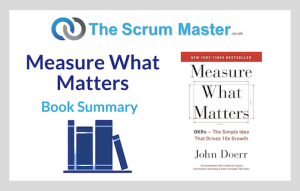
In Measure What Matters, venture capitalist John Doerr introduces a simple but powerful framework for setting and achieving goals known as OKRs – Objectives and Key Results. Originally pioneered at Intel by Andy Grove, OKRs have since powered some of the most successful organisations on the planet, from Google to the Gates Foundation. The book combines theory with case studies that show how OKRs can drive focus, alignment, and accountability across teams and entire companies.
The Origins of OKRs
The story begins at Intel, where Andy Grove, the company’s legendary CEO, created the foundation for OKRs in the 1970s. Grove’s approach was born from necessity: Intel was growing fast, competition was fierce, and employees needed clarity about what mattered most. He developed a goal-setting system based on two simple questions:
- Where do I want to go? (The Objective)
- How will I know I’m getting there? (The Key Results)
Doerr, who worked at Intel early in his career, later brought this system to Silicon Valley as a venture capitalist at Kleiner Perkins. When he invested in a small start-up called Google in 1999, he introduced OKRs to Larry Page, Sergey Brin, and their fledgling team. The impact was profound – OKRs helped Google grow from a dozen people into one of the world’s most valuable companies, all while maintaining focus and agility.
Understanding the OKR Framework
At its core, an OKR is a simple formula:
I will [Objective] as measured by [Key Results].
Objectives are ambitious, qualitative goals that define what you want to achieve. They should be significant, inspiring, and time-bound. An Objective might be something like “Delight our customers with world-class service” or “Launch a breakthrough mobile app by year-end.”
Key Results are quantitative, measurable milestones that track progress towards the Objective. They answer the question, “How will we know if we’re succeeding?” Each Objective typically has three to five Key Results, and each one is specific and measurable — such as “Achieve a customer satisfaction score of 90%+” or “Acquire 100,000 new active users.”
Doerr emphasises that OKRs should stretch the organisation. If you consistently achieve 100% of your Key Results, you’re probably playing it too safe. The goal is not perfection but progress and learning.
Why OKRs Matter
Traditional goal-setting often fails because it creates silos, vague priorities, and weak accountability. Teams drift toward busywork rather than meaningful progress. OKRs fix this by linking measurable outcomes to ambitious objectives, aligning everyone’s efforts, and making results transparent across the organisation.
OKRs encourage focus. With clear, limited priorities, teams can channel energy into what truly drives value rather than spreading effort thinly across competing goals. They also foster alignment — when OKRs are shared openly, everyone can see how their work connects to the wider mission.
Finally, OKRs create accountability. Progress is visible, measurable, and reviewed regularly. This transparency builds trust and encourages self-discipline, as each team knows where it stands and what still needs to be done.
Google: Scaling with OKRs
Google’s success story is perhaps the most famous example of OKRs in action. When Doerr introduced OKRs to the company in its early days, co-founders Larry Page and Sergey Brin immediately saw the potential to keep teams aligned as they scaled.
Each quarter, Google employees — from executives down to individual contributors — set their own OKRs. These OKRs are visible across the company, creating radical transparency. Everyone can see what others are working on and how it contributes to the overall mission “to organise the world’s information and make it universally accessible and useful.”
This structure allows Google to stay innovative while maintaining focus. Product launches, like Gmail and Android, were built with OKRs that encouraged experimentation but demanded measurable results. Employees understood that success wasn’t about perfect execution, but about measurable impact.
Even when OKRs weren’t fully achieved, they spurred meaningful progress. As Doerr explains, “When you measure what matters, you can achieve what seemed impossible.”
Focus and Commitment to Priorities
One of the most powerful aspects of OKRs is their ability to create focus. In an age of endless meetings, projects, and distractions, OKRs help organisations decide what not to do.
Doerr advises limiting OKRs to a small number — typically three to five Objectives per team or individual per quarter. This ensures that energy is directed toward the most critical outcomes. OKRs are not a to-do list; they’re a commitment to what truly matters.
Intel used this principle to dominate the semiconductor industry. When Grove set the company’s Objective to “Establish the 8086 as the industry standard microprocessor,” every team’s Key Results supported that mission. It created a clear line of sight from strategy to execution, with measurable checkpoints along the way.
Alignment and Connection for Teams
In large organisations, teams often work at cross purposes. OKRs create a shared language that connects everyone’s goals, from the boardroom to the front line.
At Google, OKRs cascade and align, but not in a rigid top-down fashion. Instead, they operate through transparency and dialogue. Leadership sets company-level OKRs, teams align their own OKRs to support those outcomes, and individuals contribute their own measurable results.
This approach builds a sense of purpose and connection. People can see how their efforts contribute to company-wide success. It replaces bureaucracy with alignment and empowers individuals to take ownership.
Tracking for Accountability
Setting goals is the easy part — tracking them is where discipline comes in. OKRs are living documents, reviewed regularly to assess progress and adjust course.
Doerr recommends grading Key Results using a simple 0.0 to 1.0 scale. A score of 0.7 is considered strong performance, reflecting meaningful progress without being overly safe. This regular tracking builds accountability and keeps OKRs relevant.
For example, at Google, quarterly OKR check-ins are part of the company’s rhythm. Teams meet to review what’s working, identify blockers, and recalibrate goals. The emphasis is on learning, not blame. By reviewing OKRs frequently, organisations maintain momentum and ensure focus remains on measurable outcomes.
Stretching for Growth
OKRs encourage ambition. Doerr distinguishes between committed OKRs, which must be achieved (for example, regulatory compliance or critical launches), and aspirational OKRs, which push teams beyond their comfort zones.
Google’s moonshot projects, such as self-driving cars or Project Loon, were built around aspirational OKRs. These goals were deliberately bold, designed to inspire creative thinking and breakthrough innovation. Even if the team achieved only part of the goal, the results often exceeded traditional expectations.
The key is psychological safety — teams must know that failing to hit 100% is acceptable as long as they learn and make meaningful progress.
CFRs: Conversations, Feedback, and Recognition
While the book’s focus is OKRs, Doerr also highlights a complementary system: CFRs — Conversations, Feedback, and Recognition. These practices help humanise OKRs and ensure they support people’s development, not just performance metrics.
CFRs provide a framework for continuous dialogue. Regular check-ins between managers and employees replace the outdated annual review. Feedback flows in all directions, keeping OKRs dynamic and relevant. Recognition celebrates progress and reinforces values, helping sustain motivation.
Together, OKRs and CFRs create a culture of alignment, learning, and trust. They ensure that the pursuit of measurable results remains balanced with empathy and human connection.
Case Study: Bono and the ONE Campaign
One of the book’s most surprising and inspiring examples comes from outside the tech world — Bono’s ONE Campaign to fight extreme poverty and disease.
Doerr introduced OKRs to Bono’s team, helping the non-profit clarify its mission and measure impact more effectively. Instead of vague aspirations like “make the world a better place,” the organisation defined concrete Objectives such as “Increase global support for anti-poverty legislation” and measurable Key Results like “Secure commitments from 10 world leaders to fund HIV/AIDS programmes.”
This disciplined approach transformed the organisation’s focus and efficiency. OKRs gave the team clarity, motivation, and a shared sense of purpose. They demonstrated that OKRs are not just for business — they can be used anywhere people want to achieve meaningful change.
Avoiding Common Pitfalls
Doerr is clear that OKRs are not a silver bullet. Poorly implemented OKRs can become just another management fad. Common pitfalls include setting too many OKRs, confusing Key Results with tasks, or failing to review progress regularly.
Another trap is linking OKRs directly to compensation. This discourages ambition and risk-taking, as people tend to play it safe. OKRs work best when used for learning and growth, not for evaluating performance or bonuses.
Leadership commitment is essential. Without consistent support from the top, OKRs can quickly fade into background noise. The system thrives in organisations that value transparency, accountability, and continuous improvement.
The Role of the Leader
Leaders play a crucial role in embedding OKRs into the culture. They must model focus, discipline, and openness. Andy Grove led Intel’s OKR reviews personally, ensuring that everyone treated them seriously. Similarly, Larry Page and Sundar Pichai use OKRs at Google to guide strategic discussions and keep teams aligned.
Leaders should communicate the “why” behind each Objective, create space for teams to craft their own Key Results, and ensure that progress is visible. When leaders treat OKRs as a living management system rather than a quarterly checklist, they become a catalyst for innovation and performance.
Why OKRs Work
At the heart of Doerr’s message is a simple truth: measurement drives improvement. When teams define what success looks like and track it consistently, they achieve more. OKRs work because they combine ambition with discipline. They give people permission to dream big but require them to back those dreams with measurable actions.
OKRs bridge the gap between vision and execution. They align teams around a shared purpose, encourage experimentation, and provide clarity in complex environments. In Doerr’s words, “Ideas are easy. Execution is everything.”
Applying OKRs in Your Organisation
Implementing OKRs doesn’t require a Silicon Valley budget or a global footprint. The principles apply to organisations of any size. Start small — perhaps with one team or project — and learn through iteration.
Begin by defining one or two ambitious Objectives for the quarter. For each Objective, craft three to five measurable Key Results that will show progress. Share them openly, review them regularly, and adapt as you learn.
Above all, create a culture where OKRs are tools for improvement, not judgment. Celebrate progress, share lessons, and focus on continuous alignment. Over time, the discipline of OKRs will transform how your teams think, plan, and deliver.
Measure What Matters is both a practical guide and an inspiring call to action. John Doerr’s OKR framework has helped shape the growth of some of the world’s most successful organisations — but its real power lies in its simplicity. By combining ambition with measurable results, OKRs turn vision into reality.
Whether you’re leading a start-up, a global corporation, or a non-profit, the message is clear: focus on what truly matters, measure progress relentlessly, and empower your people to achieve extraordinary things.